Most homeowners treat kitchen cabinet hardware ideas as the last thing to pick. That mistake costs time, money, and sometimes a full reinstall.
The best kitchen cabinet hardware ideas for custom homes balance proportion, finish quality, and hole spacing — not just color or trend. Choose hardware that matches your cabinet door style, drawer size, countertop, faucet, and lighting before you place any order.
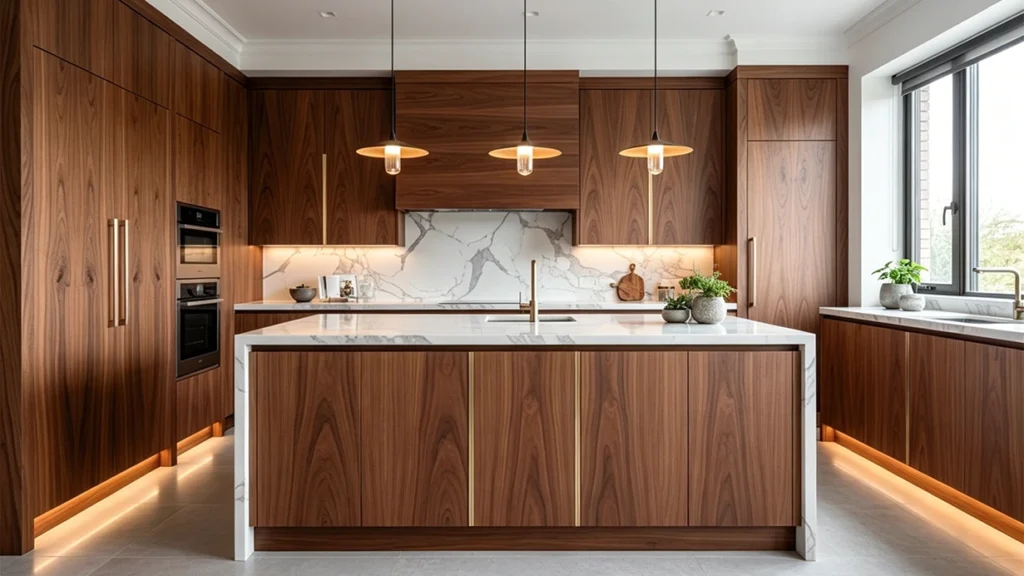
I have worked on cabinet production and whole-house project supply for many years. Hardware is not a small detail. It is the first thing you touch every morning and the last thing a guest notices when they walk in. If you get it wrong, no amount of beautiful cabinetry will save the room.
What Kitchen Cabinet Hardware Ideas Work Best for Custom Homes?
Many homeowners spend hours on cabinet colors and finishes, then rush the hardware. That is when proportion problems, wrong hole spacing, and mismatched finishes appear on site.
Think of cabinet hardware as both jewelry and a daily touchpoint. It shapes the look of the room and also affects how the cabinets feel and hold up over time. For custom homes, the best approach is to select hardware by zone — based on the main visual, door proportion, and how often each area is used.
Here are eight directions that work well in high-end custom kitchens:
Brushed Brass Pulls for Warm-Toned Cabinets
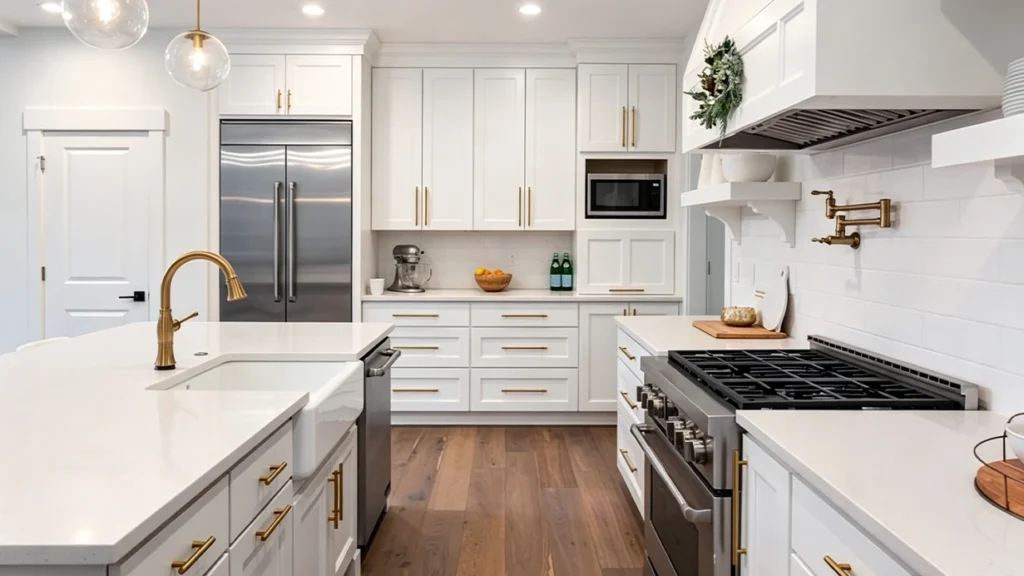
Brushed brass works well with warm white, oak, and greige cabinets. It adds warmth without looking flashy. This is one of the most consistent choices I see in villa projects.
Polished Nickel for Cool-Toned Kitchens
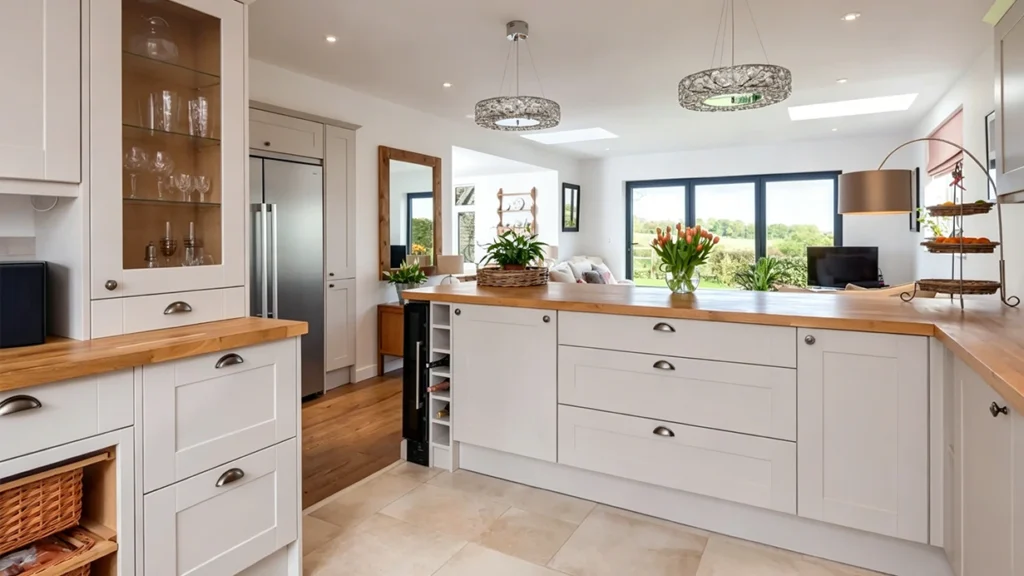
Polished nickel is one of the most timeless finishes available. It reads clean and bright without feeling cold. It pairs well with white, gray, and blue-green cabinet colors.
Matte Black Hardware for Contrast
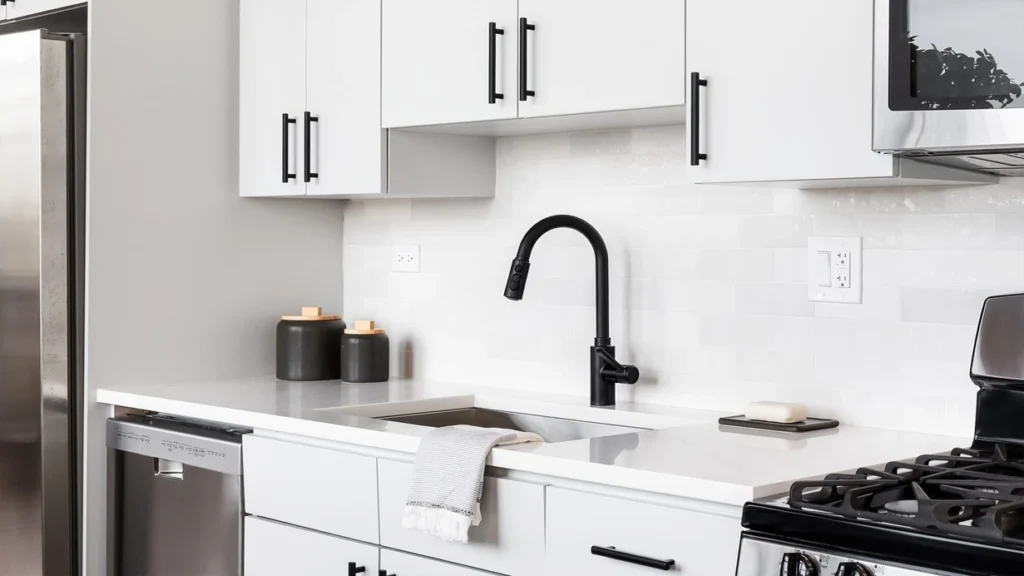
Matte black creates strong visual contrast, but only use it when the finish quality is high. Low-quality matte black coatings chip within one to two years of daily use.
Long Drawer Pulls for Wide Drawers
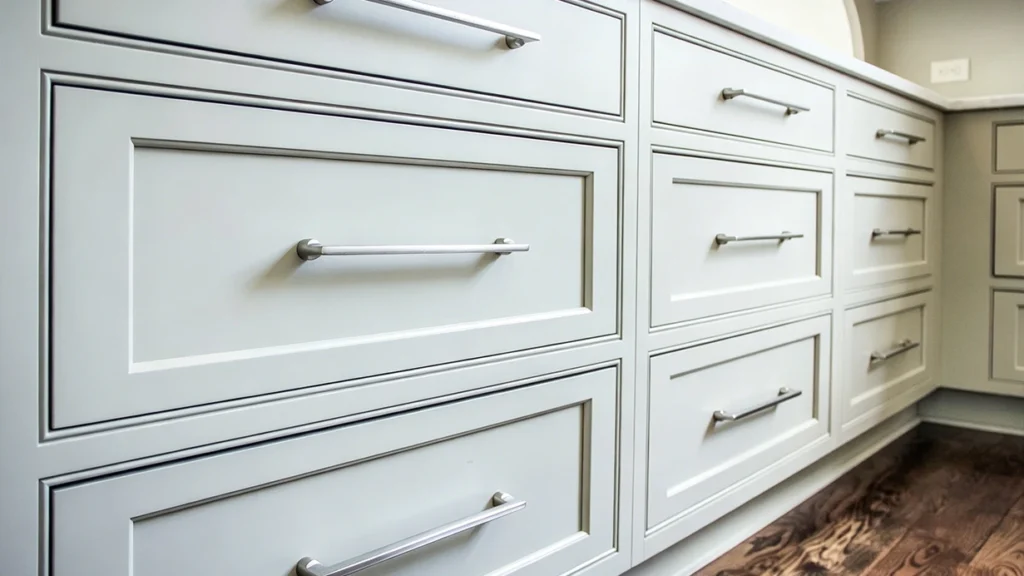
Long pulls on wide drawers are a signature of modern kitchen cabinet hardware ideas. A 30-inch drawer usually needs an 8 to 12 inch pull. One long pull looks cleaner than two short ones on wide formats.
Knobs and Pulls Mix for Shaker Cabinets
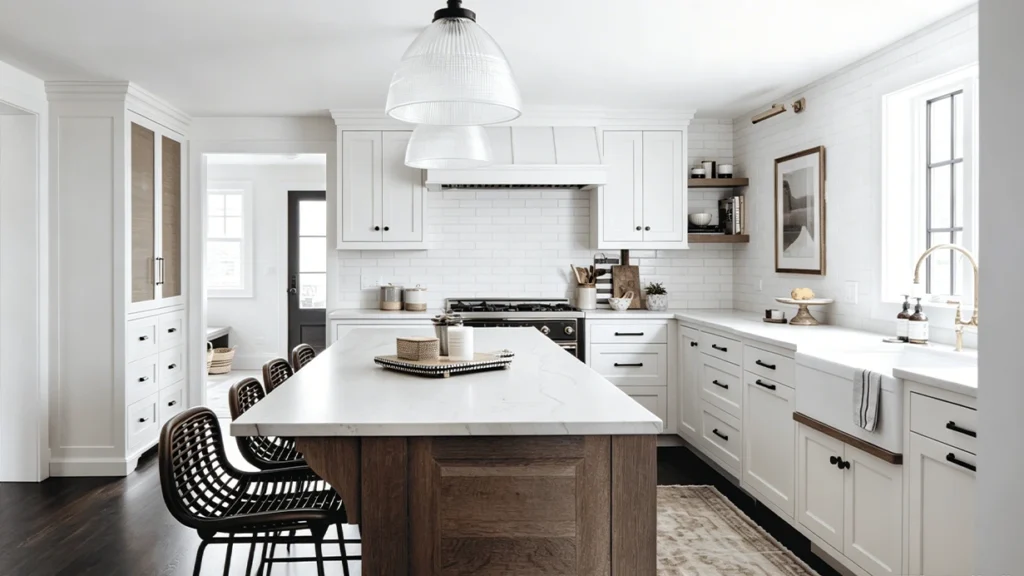
Shaker kitchen cabinet hardware ideas often work best with a mix. Use knobs on upper doors and pulls on lower drawers. This follows the traditional proportion of the shaker style.
Backplate Knobs for Classic or French-Style Kitchens
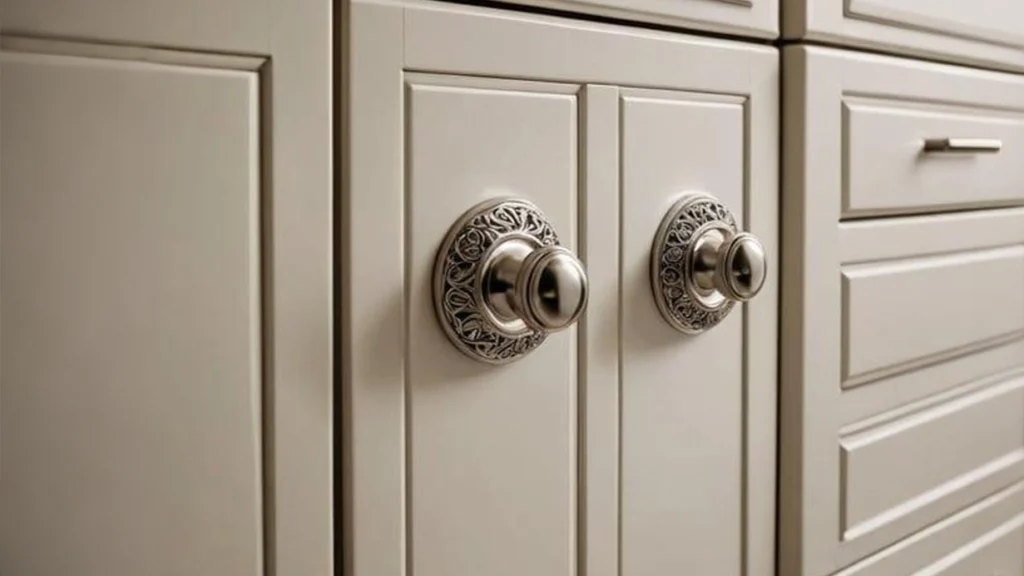
Backplates add a layer of visual detail and protect the cabinet surface around the knob. They also help when renovating, because they can cover old hole marks or surface wear.
Integrated Edge Pulls for Minimalist Kitchens
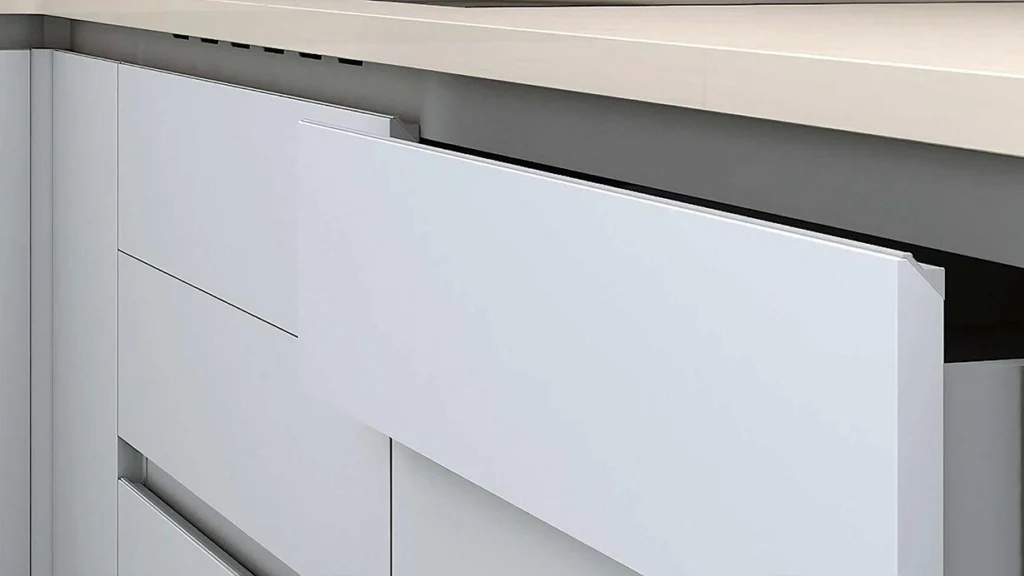
Edge pulls give modern flat-panel kitchens a clean, handleless look. They require precise door thickness and good cabinet build quality, or the reveal will look uneven.
Statement Hardware for Island Cabinets Only
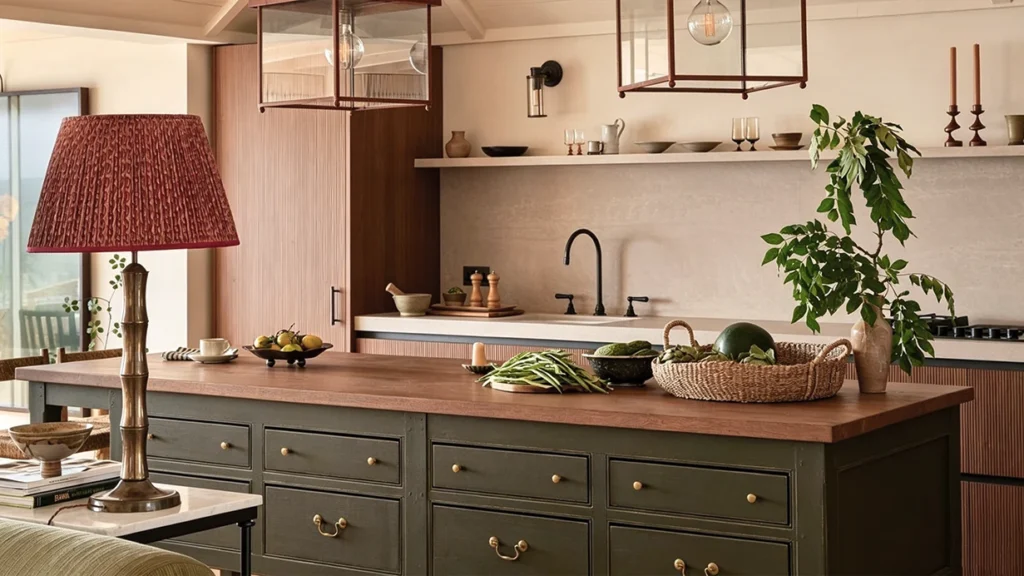
I always recommend keeping most of the kitchen consistent and saving statement hardware for the island. One bold piece draws the eye without overwhelming the whole space.
A custom home is not a showroom display. Each pull, knob, or edge pull needs to fit the cabinet drawing, the countertop height, the lighting color, and the user’s daily habits. Choosing one style for the whole house without checking these details is the most common project mistake I see.
Which Cabinet Hardware Colors Are Timeless and Which Ones Feel Trendy?
Homeowners often ask me what color hardware will still look right in ten years. The honest answer is that finish quality matters more than the color name.
Timeless finishes include polished nickel, brushed nickel, unlacquered brass, aged brass, and oil-rubbed bronze. Finishes that tend to feel dated quickly are cheap bright gold electroplating, over-polished chrome, and low-quality spray matte black. The difference often comes down to material and surface treatment, not the color itself.
Here is how I match hardware color to cabinet color in real projects:
White Cabinets
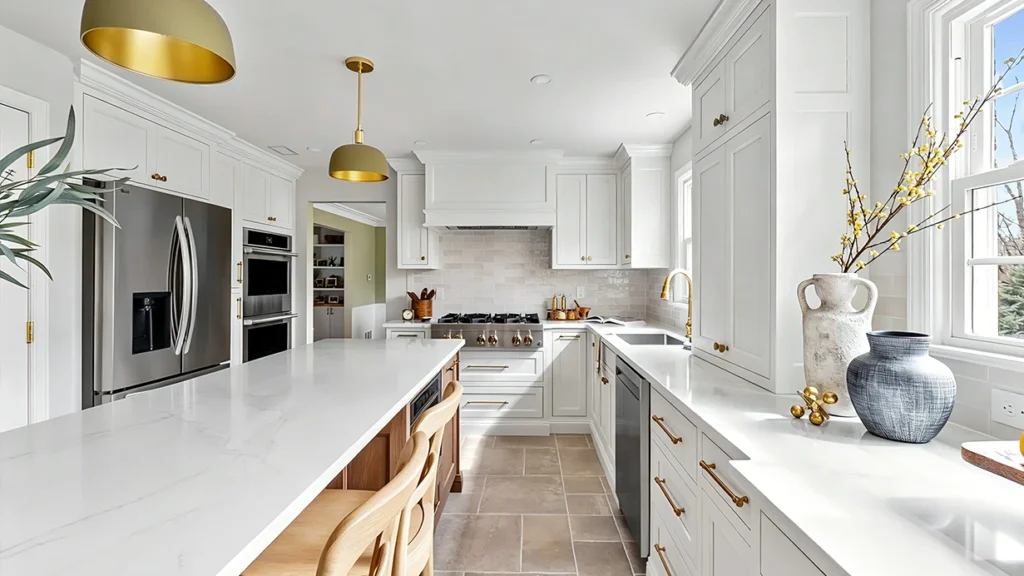
White cabinets are the most flexible base. Brass adds warmth. Matte black adds contrast. Polished nickel keeps the look clean and timeless. For kitchen cabinet hardware ideas for white cabinets, I usually ask what the faucet and lighting finish are first.
Oak Cabinets
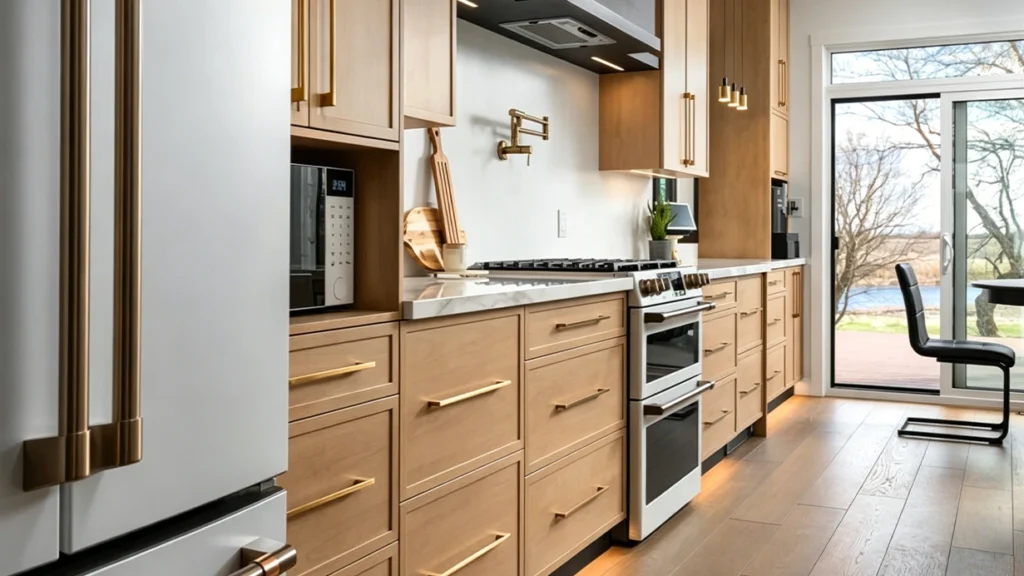
Oak has a warm, natural grain. Brushed brass and bronze work well because they stay in the same warm tone family. Black hardware on oak cabinets creates a stronger contrast that suits modern and farmhouse styles. Oak kitchen cabinet hardware ideas should avoid chrome, which looks cold against natural wood.
Dark Cabinets
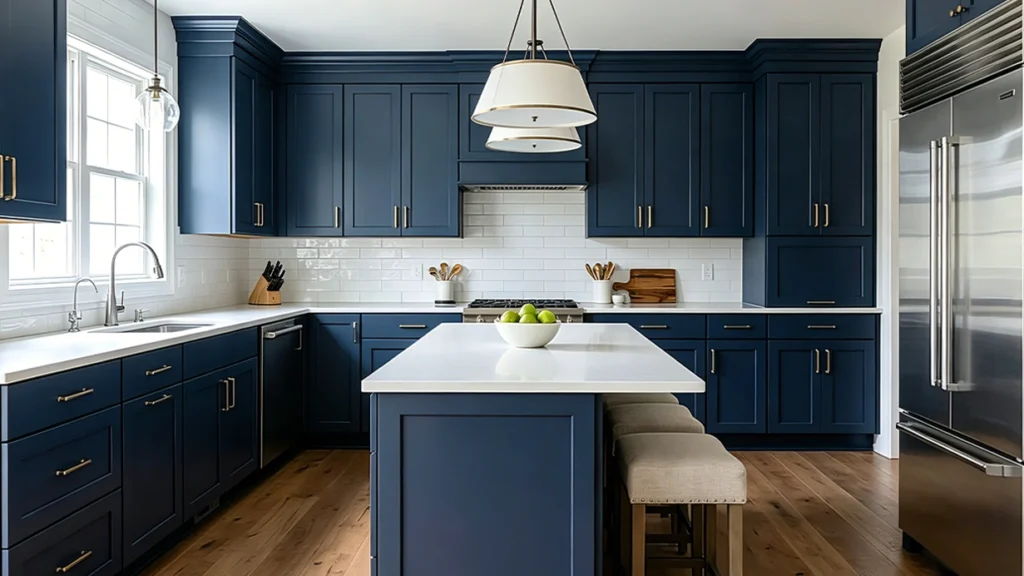
Dark cabinets — navy, forest green, charcoal — pair well with brass, antique bronze, and nickel. These finishes give the hardware enough visibility against a dark background.
Shaker and Flat Panel
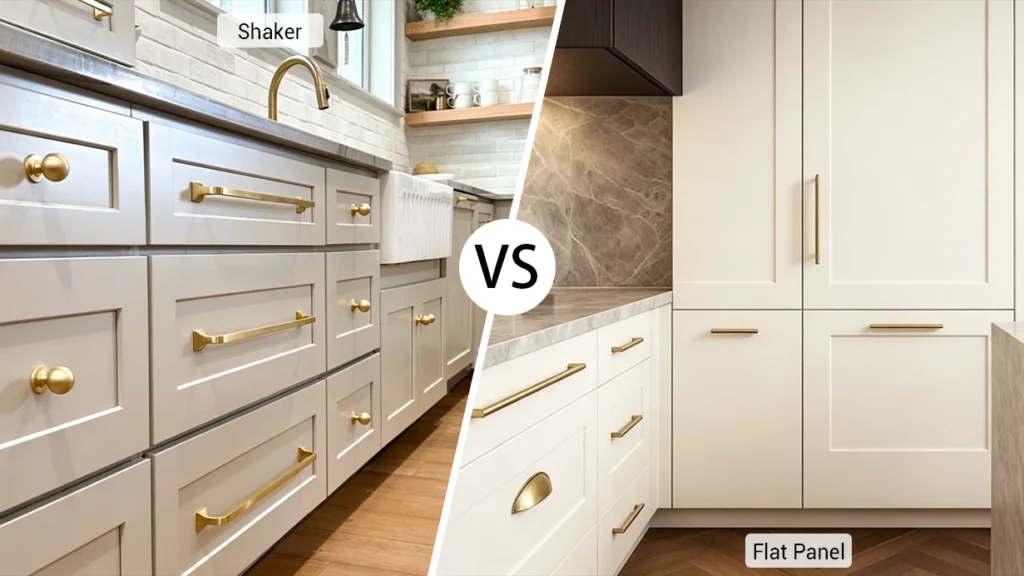
Shaker cabinet hardware benefits from a mix of knobs and pulls in brass, nickel, or black. Flat panel modern cabinets suit long pulls, edge pulls, or integrated handles in brushed finishes.
Kitchen hardware trends for 2026 are moving toward warm metals, weathered finishes, mixed metals, and sculptural shapes. But I tell my clients the same thing every time: a high-end home you plan to live in for ten years should not be fully driven by what is trending now. Unlacquered brass will develop a natural patina over time — that is not a defect, it is a living finish. Matte black can chip if the base coating is low quality. Unique kitchen cabinet hardware ideas only stay unique when the finish holds up. Always ask for a physical sample before committing to a full order.
What Size Cabinet Hardware Looks Right on Different Doors and Drawers?
Size is the most common mistake I see in hardware orders. A pull that looks right on a product photo can look completely wrong on the actual cabinet face.
A useful starting rule is that a pull’s total length should be roughly one-third of the drawer width or the door height. This is the 1/3 rule for overall length, not for hole spacing. Center-to-center measurement is separate and must be confirmed before drilling.
Source:
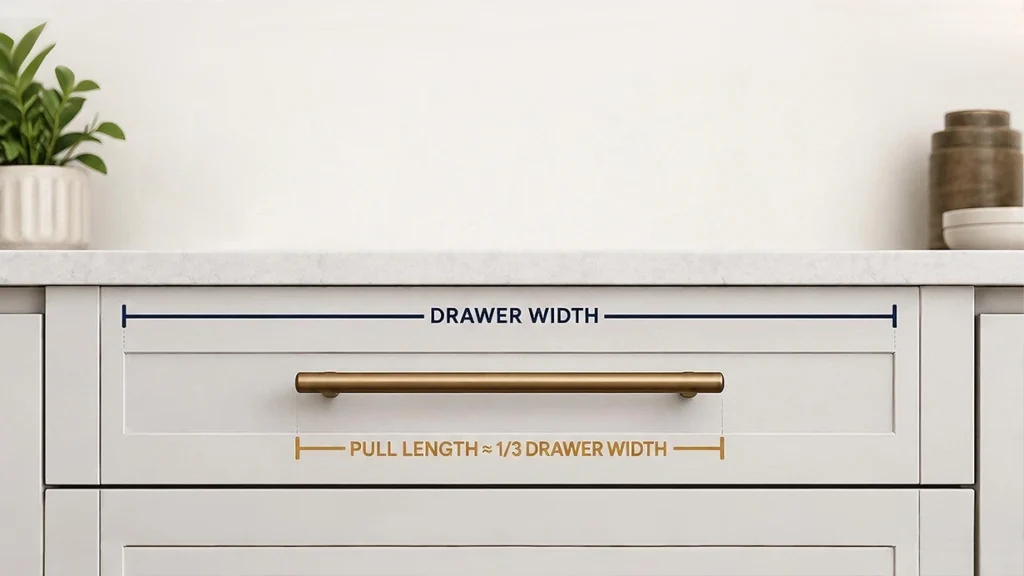
Here is how I size pulls in real kitchens:
Small Drawers and Doors (12–18 Inches)
A small knob or a short pull in the 3 to 4 inch range fits well here. Do not use a long pull on a narrow drawer — it will look wider than the drawer itself.
Medium Drawers (24 Inches)
A 6 to 8 inch pull fits a 24-inch drawer without looking heavy. This is the most common drawer size in standard kitchens, so this pull length has the widest selection available.
Wide Drawers (30–36 Inches)
An 8 to 12 inch pull is the right range here. For drawers over 36 inches, one long pull looks more modern. Two shorter pulls side by side look more traditional and may suit farmhouse kitchen cabinet hardware ideas better.
Extra-Wide Drawers
One long pull that spans most of the drawer face is the cleaner choice for a modern kitchen. Two short pulls give a more symmetrical, traditional look and can be easier to grab when both hands are full.
When the same kitchen has drawers of very different sizes next to each other, I do not recommend forcing them all to use the exact same pull length. A better approach is to keep all hardware in the same series and finish, then let the length vary by drawer size. The eye reads the finish and shape as consistent. The sizing difference actually helps the proportions feel more intentional. Installation position also matters — centered on a drawer front reads neutral, while top-rail placement on a lower drawer makes it easier to open without bending.
Should You Choose Pulls, Knobs, or a Mix of Both?
This is the question I get asked most often on site visits. The answer depends on who uses the kitchen, how heavy the drawers are, and what style the cabinets are.
The safest starting formula is: use pulls on all drawers and knobs on upper doors. This works for almost every kitchen style. For custom homes, you can refine this by zone — pulls near the stove and sink where hands are often wet or full, knobs or edge pulls on lighter upper cabinets.
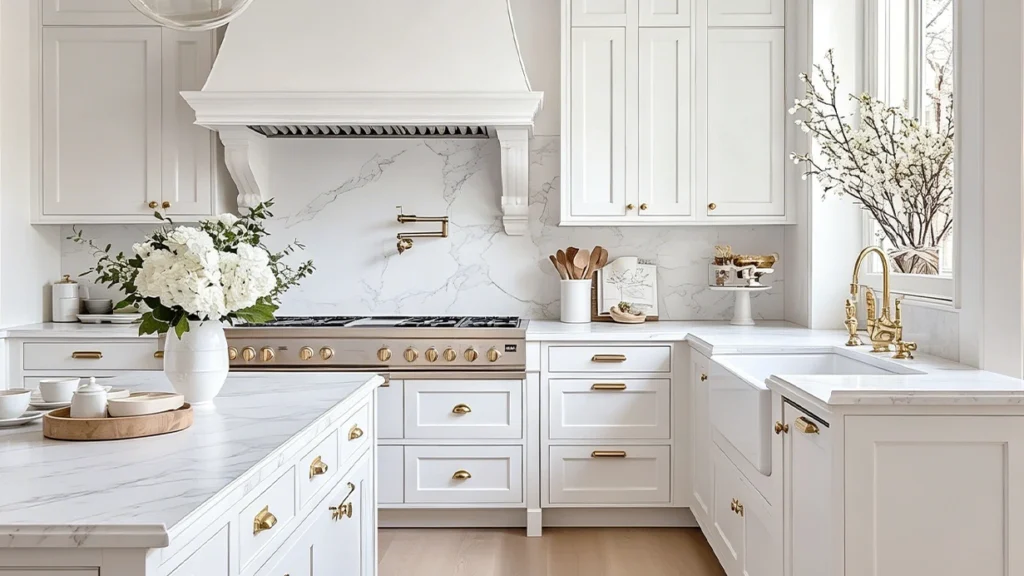
Here is how I decide in practice:
When to Use Pulls
Pulls are the right choice for heavy drawers, pot drawers, trash pull-outs, and any area where the drawer is opened with a full hand. They are easier to grip when your hands are wet or full. Long pulls are a core part of modern kitchen cabinet hardware ideas.
When to Use Knobs
Knobs work well on light upper cabinet doors, small lower doors, and traditional or classic kitchen styles. They take up less visual space and suit formal or detailed door profiles.
Cup Pulls for Farmhouse Kitchens
Cup pulls, also called bin pulls, are the traditional choice for farmhouse kitchen cabinet hardware ideas and classic shaker kitchens. They give the kitchen a warm, lived-in character that flat bar pulls cannot.
Edge Pulls for Minimalist Kitchens
Edge pulls give a clean, integrated look on flat panel doors. They require precise installation and good door thickness consistency. If the cabinet build quality is not tight, the edge reveal will look uneven from different angles.
Backplates for Renovation Projects
If you are replacing old hardware in a renovation, backplates are a practical solution. They cover old holes, marks, and surface shadows left by previous hardware.
One thing I want to say clearly: drilling cabinet holes is permanent. Many clients feel stuck choosing between pulls and knobs because they are afraid to decide before they can see it in person. The practical answer is to order one sample set and test it on a single door or drawer before placing the full order. If your kitchen has elderly family members, young children, or anyone with limited grip strength, pulls are almost always the better ergonomic choice over knobs — especially on heavy lower drawers.
What Materials and Finishes Should You Avoid If You Want Hardware to Last?
This is the chapter that most hardware marketing skips. Finish quality is what separates hardware that looks the same after five years from hardware that looks worn after eighteen months.
For high-use areas, choose solid brass, stainless steel, or high-quality bronze with a tested surface treatment. Be cautious with unbranded zinc alloy, cheap spray-painted matte black, and low-quality bright gold electroplating. These often look fine in photos but fail quickly under daily kitchen conditions.
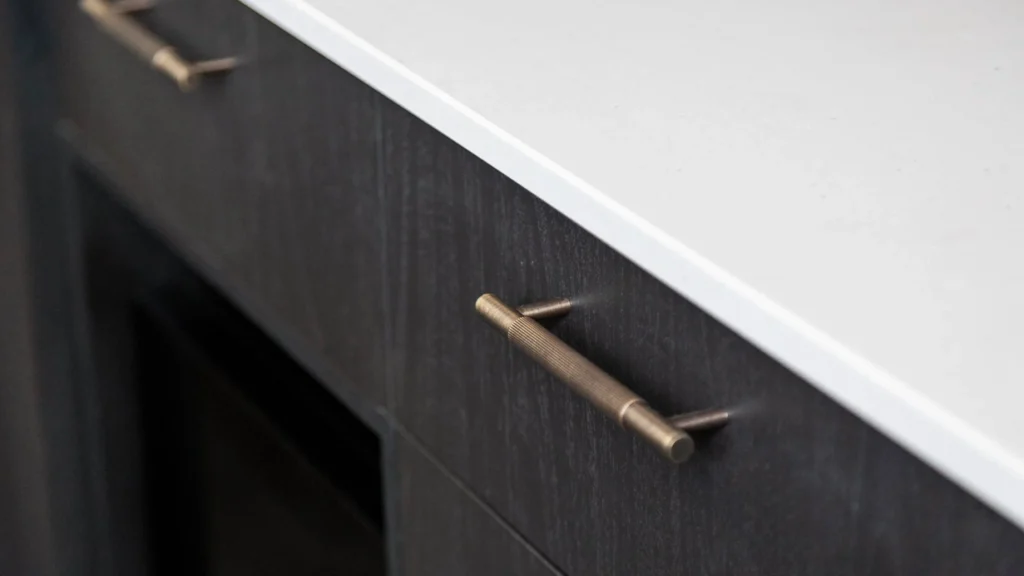
Here is how I think about materials and finishes:
Solid Brass
Solid brass is the most reliable base material for premium hardware. It is heavy, holds machined details well, and accepts a wide range of surface finishes. Unlacquered brass will develop a natural patina over time — this is expected and part of the look, not a sign of failure.
Stainless Steel
Stainless steel is the most durable option for high-frequency use. It resists moisture, cleaning chemicals, and wear. It suits modern kitchen cabinet hardware ideas and black kitchen cabinet hardware ideas where the base needs to stay stable.
Zinc Alloy
Zinc alloy is a common base material for mid-range hardware. It is not inherently bad, but the finish quality must be checked carefully. Ask the supplier what surface treatment is applied and whether samples are available before a full order.
Leather, Wood, and Acrylic
These materials can look striking in the right kitchen. But they require specific cleaning methods and do not always age well in high-moisture areas. Confirm the cleaning requirements and test durability before using them near the sink or stove.
Finish Risks to Know
Cheap matte black hardware chips at the edges within one to two years of daily use. Gold and champagne bronze finishes vary widely by brand — the same name can look completely different under different lighting. Always match the sample to your faucet and light fixtures before ordering. Brushed nickel and polished nickel are more stable choices for long-term consistency.
Before I confirm any hardware order for a project, I check six things: whether the base material is stated clearly, whether a finish sample is available, whether the installation screws are included and the right length, whether spare pieces can be ordered separately, whether the finish is compatible with standard kitchen cleaners, and whether the same series comes in multiple lengths. If a supplier cannot answer all six questions, I treat that as a quality risk. The finish is what the client sees and touches every day — it should not be a guessing game.
What Should You Check Before Ordering Hardware for a Custom Kitchen?
I have seen beautiful hardware arrive on site and still cause problems — wrong hole spacing, too few pieces, finishes that do not match under the actual kitchen lighting. The order checklist is not optional.
Before placing any hardware order for a custom kitchen, confirm at least seven things: cabinet drawings, door and drawer count by room, pull size per location, center-to-center hole spacing, finish sample under project lighting, installation position, and spare quantity. Missing any one of these leads to site problems.
Here is my full pre-order checklist:
Count Every Door and Drawer by Room
Do this from the cabinet drawings, not from memory. Mark upper cabinets, lower cabinets, island drawers, and pantry doors separately. It is easy to undercount when working from photos or estimates.
Mark Where Pulls, Knobs, and Handleless Zones Go
Not every door needs the same hardware type. Mark this clearly on the drawing before ordering. Handleless zones for integrated edge pulls need to be confirmed with the cabinet maker before production.
Confirm Hole Spacing Before Drilling
Center-to-center spacing on the hardware must match what will be drilled in the cabinet. This is the most common measurement mistake. Confirm the exact spacing from the hardware spec sheet, not from the product photo dimensions.
Confirm Finish Under Project Lighting
Take the hardware sample to the actual kitchen space, or at minimum to a room with the same lighting color temperature. Hardware that looks warm under showroom light can look flat or gray under cool white LED lighting.
Order Samples Before Full Quantity
For a full custom home kitchen, always order one sample set first. Test the weight, finish, and proportion on an actual door and drawer before confirming the full quantity.
Keep 3 to 5 Percent Spare Hardware
Spare hardware covers damaged pieces, future replacements, and additions if more storage is added later. For a large kitchen, I recommend keeping at least five percent extra, labeled by room and cabinet number.
Extra Checks for Renovation Projects
If you are replacing old hardware in an existing kitchen, measure the old hole spacing before ordering anything. Check for surface shadows or marks left by the previous hardware. If the marks are visible, consider backplates as part of the new design.
For new custom homes, confirm the cabinet door thickness, door style, pull-out bins, inner drawers, dishwasher panel, and tall refrigerator cabinet design before finalizing hardware. All of these affect the right pull length, hole spacing, and handle type. At George Construction Group, we review hardware together with the cabinet drawings — confirming size, quantity, finish, hole spacing, and installation position for every door and drawer before production begins. This is how we prevent the proportion problems and quantity gaps that cause delays on site.
Project Snapshot: Canada Luxury Residence
Pain: The developer faced constant delays due to mismatched hardware finishes and uneven reveals on minimalist flat-panel doors from multiple vendors.
Solution: We provided a one-stop integrated solution, supplying precision-milled cabinetry with factory-pre-fitted edge pulls, ensuring exact tolerances and unified finish quality.
Result: Zero on-site installation errors, significantly reduced labor costs, and a perfectly unified quiet luxury aesthetic.
Conclusion
Good kitchen cabinet hardware ideas come from reviewing proportion, finish quality, and installation details — not just color trends. If you are planning a custom kitchen, send us your drawings and we will help you get it right from the start.
Ready to Build Without the Stress?
A flawless custom home requires more than just perfect kitchen hardware. Whether you are developing luxury villas or outfitting a high-end apartment complex, we provide a true one-stop solution. From custom cabinetry and bespoke bathroom spaces to premium furniture, windows, and lighting—we control the quality, coordinate the aesthetics, and guarantee the fit.
Upload your floor plans or project details below, and our engineering team will provide a comprehensive whole-house proposal.