The best paint for kitchen cabinets is not just a popular shelf brand. Pick wrong, and it chips near the handles in months. I can help you choose right.
For a simple refresh, a high-quality cabinet enamel, hybrid alkyd, or urethane enamel works well when the surface is cleaned, sanded, primed, and fully cured. For a high-end kitchen or villa, factory-finished custom cabinets give the most durable paint for kitchen cabinets and a cleaner result.
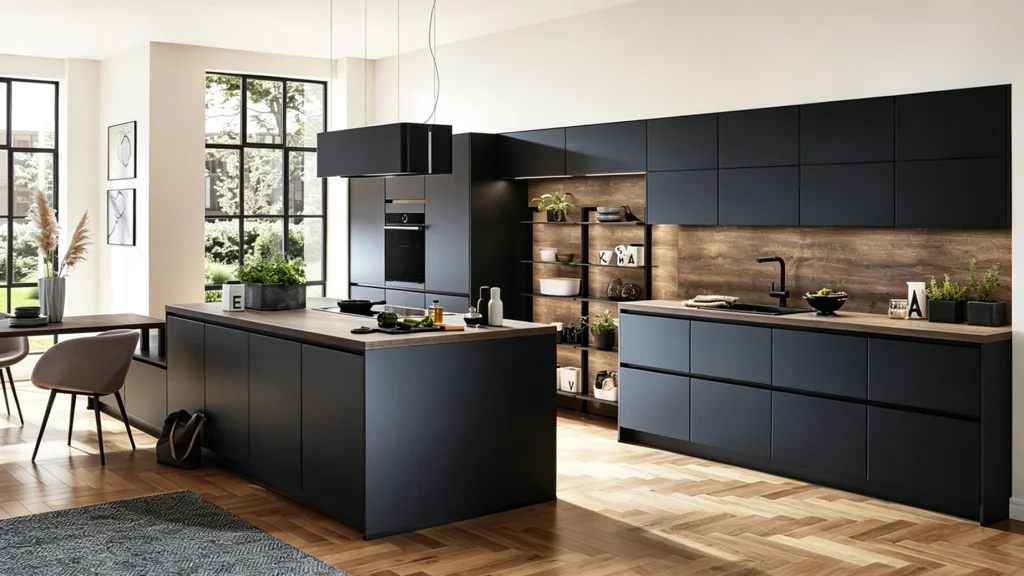
I have spent years on the factory floor. I have seen which finishes last and which fail. Below, I break down paint types, finish, color, prep, and how factories control a premium cabinet finish.
What Type of Paint Works Best on Kitchen Cabinets?
You stand in the paint aisle. Twenty cans all claim to be the best. The wrong type peels fast within a year. Let me make the choice simple for you.
The best type of paint for kitchen cabinets is a hard, self-leveling enamel. Hybrid alkyd enamel and urethane trim enamel suit most homes. For premium projects, a 2K or factory lacquer gives the hardest, most stable finish.
Source:
https://en.wikipedia.org/wiki/Enamel
Each paint type fits a different job. Some are easy for beginners. Some need a spray booth. I put the main options in one table, so you can match the best paint for kitchen cabinets to your home and budget.
| Paint / Finish Type | Best For | Pros | Risks |
|---|---|---|---|
| Hybrid alkyd enamel | Most DIY and semi-pro refreshes | Levels well, harder than latex, good for cabinets | Still needs sanding, primer, cure time |
| Urethane trim enamel | High-use areas | More wear-resistant, good for doors and kickboards | Needs correct application, can still chip |
| Acrylic latex | Low budget, low-wear areas | Low VOC, easy cleanup, dries fast | Can stay soft, shows brush texture |
| Oil-based paint | Traditional durable jobs | Levels well, hard film | Strong smell, hard cleanup, rules limit it, can yellow |
| Chalk paint | Decorative refresh | Easy to use, matte vintage look | Weak for busy kitchens, needs a topcoat |
| 2K / lacquer / factory coating | High-end custom, project cabinets | Hardest, most stable, factory look | Not for DIY, needs equipment and a booth |
DIY refresh
If you want a quick update, pick a high-quality cabinet enamel. A good hybrid alkyd is the best kind of paint for kitchen cabinets at home. Clean, sand, and prime first, or it will not hold.
High-end kitchen
For a villa or premium home, do not look at the paint first. Check the cabinet box and door material. A great paint cannot save a weak door. Factory-finished cabinets give a safer, longer-lasting result.
Small project
For an apartment, rental, or B&B, think about cleaning, batch consistency, and spare parts. You want every door to match. You want to fix one panel later, not repaint a whole kitchen.
Here is the part most guides skip. A paint name does not promise a result. The same can of urethane enamel can last ten years or peel in one. The difference is prep, primer, coats, and cure. Factories control all of this in one place. At home, you control it with patience. Pick your paint by your skill and your time, not by the label alone.
What Finish and Color Look Best on Kitchen Cabinets?
You fall for a color online. In your own kitchen, it looks flat and cheap. Finish and light change everything. I will show you how to get it right.
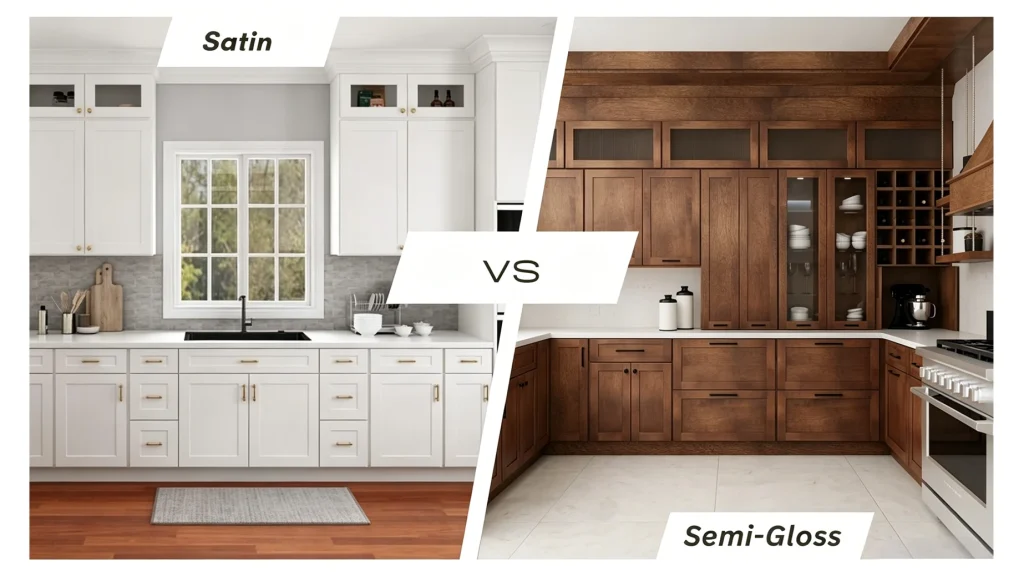
For most kitchens, satin and semi-gloss look best and clean easily. Satin feels soft and high-end. Semi-gloss suits busy homes and rentals. For the best kitchen cabinet paint colors, warm whites, deep greens, and matte black read as premium when paired well.
Source:
https://www.kilz.com/blog/what-are-paint-sheens-and-whats-the-difference
https://www.rmcad.edu/blog/color-trends-in-interior-design-whats-hot-in-2025
I always pick the finish before the color. Durability and cleaning come first. Color comes second. A finish decides how the door feels, cleans, and ages. Here is how the main finishes behave in a real kitchen.
| Finish | Best For | Note |
|---|---|---|
| Satin | High-end homes | Soft look, hides small flaws, still cleanable |
| Semi-gloss | Busy kitchens, kids, rental villas | Easy to wipe, very durable |
| High-gloss | Modern, wipe-heavy kitchens | Tough, but shows fingerprints and flaws |
| Matte / flat | Design-led, premium look | Risky in kitchens, needs a strong coating |
| Eggshell | Low-wear areas | Okay for some doors, not the safest pick |
Best white paint for kitchen cabinets
For white, choose a warm or creamy white. The best white paint for kitchen cabinets has a soft, slightly warm tone. Cold, blue-white can look cheap under kitchen light. Warm white feels rich and stays timeless.
Best black paint for kitchen cabinets
The best black paint for kitchen cabinets works in modern, high-contrast rooms. Black looks bold and clean. Watch two things: control fingerprints with the right sheen, and balance black with light counters or floors.
Best green paint for kitchen cabinets
For green, sage, olive, and deep green feel current and high-end. The best green paint for kitchen cabinets depends on your counters, floor, and light. Test a sample on a door before you commit.
Wood and painted mix
In premium kitchens, I often mix finishes. Paint the perimeter and use a wood island. Or keep wood tall cabinets with painted base units. This mix adds warmth and looks custom, not flat.
Why color alone will not look high-end
A cabinet color looks high-end only when it works with the door profile, countertop, floor tone, hardware finish, and light. A trend color on a cheap door still looks cheap. The whole picture matters, not the color name.
Color trends move fast. A door profile and a good finish last much longer. I have seen warm white kitchens still look fresh after ten years. I have also seen a trendy color fail because the sheen was wrong and the door was plain. So choose color last. First fix the finish, the door style, and the light. Then the color will do its job and hold its value.
How Should Kitchen Cabinets Be Prepared Before Painting?
You want to skip the boring prep. I understand the urge. But skipped prep is the top reason paint peels. Good prep is where a finish is won or lost.
Most cabinets should not skip cleaning, light sanding, and primer. People ask about the best paint for kitchen cabinets without sanding, but skipping sanding raises the risk of peeling. A bonding primer helps. But clean, scuffed, primed surfaces always hold best.
Prep is simple if you follow an order. Do not rush it. Each step helps the paint stick and last. Here is the order I use on real cabinet jobs.
- Take off the doors and all hardware.
- Number each door and take photos.
- Degrease well, especially near the stove, handles, sink, and trash pull-out.
- Check the material: wood, MDF, plywood, laminate, thermofoil, or melamine.
- Sand or scuff-sand the surface.
- Choose a bonding primer, or a shellac or oil-based primer.
- Apply thin coats, more than one.
- Wait for a full cure. Do not use them when they only feel dry.
| Cabinet Material | Paint Risk | Better Option |
|---|---|---|
| Solid wood | Paintable, but treat grain and old coating | Good for refinishing or respraying |
| MDF paint-grade door | Sprays well, but edge sealing is key | Factory spraying is more stable |
| Plywood veneer | Depends on the surface and edges | Respray or replace the door |
| Thermofoil | High risk, hard to fix once it lifts | Better to replace the door |
| Melamine / laminate | Needs a special bonding primer | For premium projects, replace doors or boxes |
Here is a hard truth about the no-sanding shortcut. A bonding primer can grip a slick surface, so some jobs really can skip heavy sanding. But it still needs a clean, oil-free surface and a light scuff for the best bond. On wood and MDF, I always scuff and prime. On thermofoil and laminate, I often tell clients to replace the doors instead. The prep tells me if paint will last. If the surface is wrong, no paint will save it.
Is It Better to Brush, Roll, Spray, or Use a Factory Finish?
You want a smooth, factory-like finish at home. A brush leaves marks. A sprayer needs a lot of setup. So which method should you trust? Let me compare them all.
Spray gives the smoothest finish, but it needs masking and a clean space. A brush suits small areas. A roller suits frames and large faces. For a high-end kitchen, a factory finish is the most stable, because the cabinet is sprayed and cured before it ships.
Source:
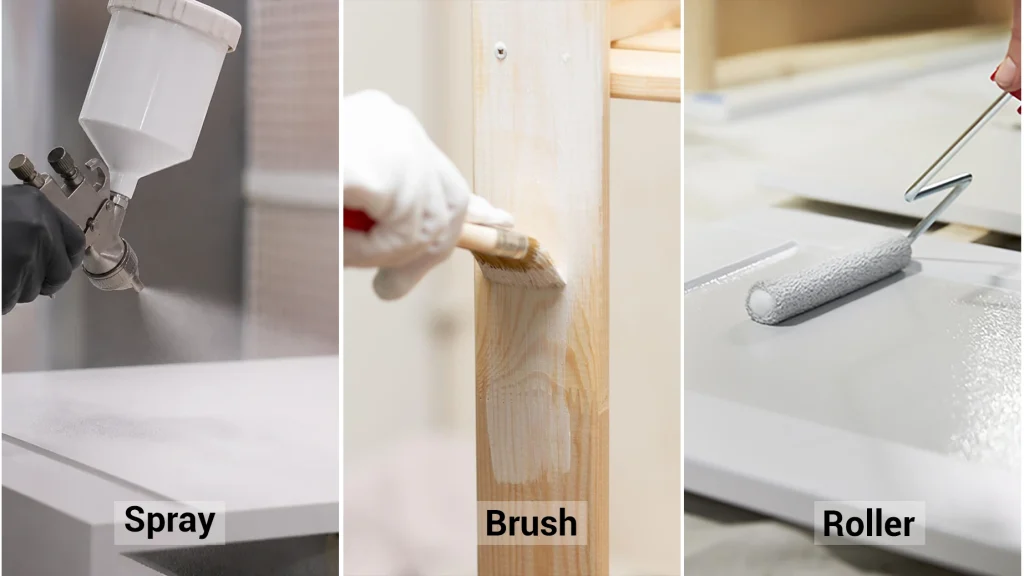
Each method has a place. Your choice depends on size, budget, skill, and how perfect you want the result. Here is how the four options compare when you finish a kitchen.
Brush
A brush is cheap and easy. It suits small areas and tight spots. But it can leave brush marks. Use a good brush and a self-leveling enamel to reduce them. Even then, the result is not glass-smooth.
Roller
A roller covers cabinet frames and large flat doors fast. Pick a fine foam or microfiber roller. It leaves a light texture, not a spray-smooth surface. For many homes, that texture is fine and still looks clean.
Spray
Spray gives the finest, smoothest surface. It is the closest you get to a factory look at home. But it needs masking, good airflow, and clean air. Dust and overspray cause problems. Most beginners struggle with spray on the first try.
Factory finish
A factory finish is sprayed flat, in a controlled booth, then cured. The result is even and hard. For new cabinets, high-end homes, and small project batches, this is the safest path. In tests, a urethane like Sherwin-Williams Emerald brushes and rolls well, but a booth still beats a jobsite.
This is where I help clients the most. For a high-end kitchen, the best finish is often not made on the jobsite. It is controlled before the cabinet arrives. We pick the material. We seal the edges. We choose the primer system. We spray in a booth. We cure, inspect, pack, and plan touch-ups. A jobsite cannot match a controlled line. So for a premium project, I move the finish back to the factory, where I can control every step.
Why Do Painted Kitchen Cabinets Chip, Peel, or Stain?
Your brand-new cabinets looked perfect at first. A year later, the paint chips near the handles. It feels like wasted money. The cause is rarely the paint brand alone.
Painted cabinets usually chip from poor adhesion, grease, weak primer, short curing, soft material, sharp edges, or heavy cleaning—not just a bad paint brand. Even the most durable paint for kitchen cabinets will fail if the prep and the substrate are wrong.
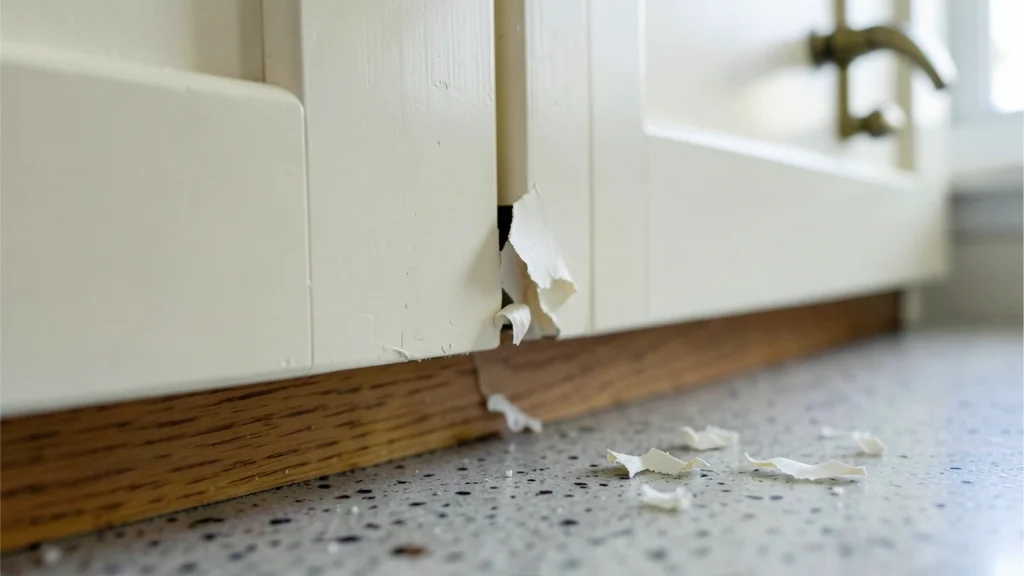
I see the same failures again and again. Most start before the paint dries. Some start with daily use. Here are the main causes, and then the zones that fail first.
Poor prep and bad primer
Most failures start here. Grease left on the surface blocks the bond. No sanding means weak grip. The wrong primer over an old coating peels. Prep and primer decide if paint holds for years or months.
Paint that never fully cured
Paint can feel dry in a day. Full cure takes about thirty days. People use the cabinets too soon. They wipe hard or use strong cleaner. The soft film scratches and chips before it hardens.
Hard materials and hard use
Some surfaces are hard to paint. Thermofoil, melamine, and laminate fail if handled wrong. Kids, pets, rentals, and B&Bs add heavy wear. White cabinets show yellowing, stains, and dings faster than darker colors.
| Cabinet Area | Common Failure | What to Check Before Painting |
|---|---|---|
| Sink base | Swelling, peeling | Moisture damage, edge sealing |
| Trash pull-out | Scratches, chips | Handle area, impact resistance |
| Dishwasher side | Heat and moisture damage | Side panel material |
| Handles / knobs | Hand oil, rubbing | Primer adhesion, hardware placement |
| Lower doors | Kicks, cleaning damage | Harder finish or replaceable door panels |
Look at where cabinets fail, and you learn how to prevent it. The sink base meets water. The trash pull-out takes knocks. Handles meet hand oil all day. These zones need the best prep, the hardest finish, and good sealing. On premium jobs, I plan for them early. I seal edges, pick tougher coatings, and design doors that I can replace if needed. A finish is only as strong as its weakest corner.
Case Snapshot: Luxury Villa Renovation
Pain Point: A high-end apartment project struggled with peeling site-painted cabinets due to coastal humidity and heavy use.
Solution: We replaced them with our custom, factory-lacquered cabinets featuring complete edge-sealing technology and TSCA Title VI certified materials.
Result: Flawless batch consistency with zero moisture damage or chipping after 3 years.
When Should You Paint, Reface, Replace Doors, or Choose New Custom Cabinets?
You are not sure whether to paint or start over. Paint is cheap, but it cannot fix everything. The wrong choice wastes time and money. Let me make it clear.
Paint when the boxes are solid and only the color feels old. Replace doors when the boxes are good but the style is dated. Choose new custom cabinets when the layout, material, or moisture is wrong. For luxury homes, factory-finished custom cabinets are the safest pick.
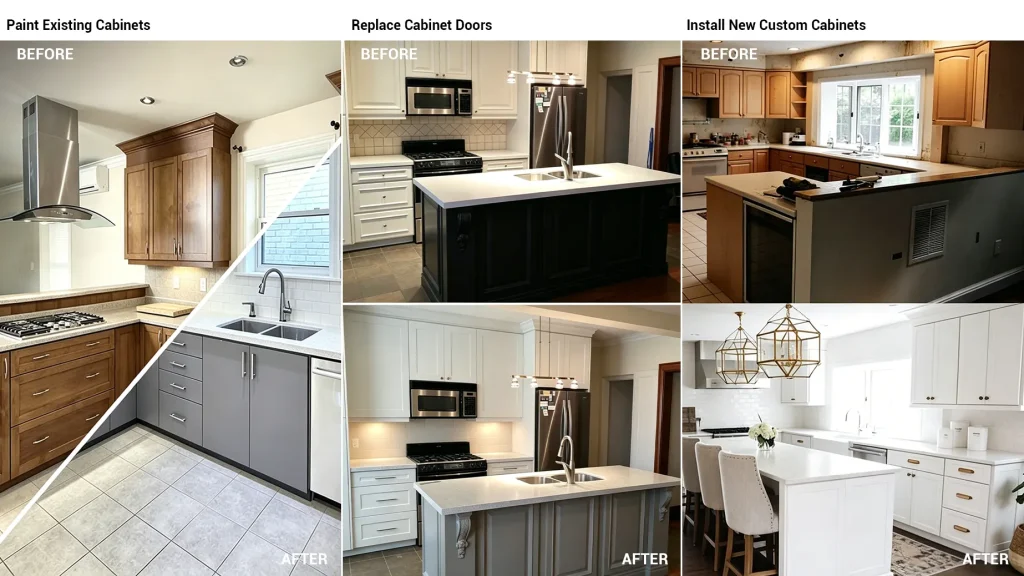
The right choice depends on your cabinet and your goal. A short-term home is not a forever home. Here is a simple matrix to match your situation to the best move.
| Situation | Best Choice | Why |
|---|---|---|
| Boxes are good, only the color is old | Paint | Low cost, fine for the short and mid term |
| Boxes are good, but doors are old or dated | Replace cabinet doors | Lower cost than full new, but a big visual change |
| Boxes have moisture damage, warping, or bad layout | New custom cabinets | Paint cannot fix structure or function |
| High-end villa kitchen | Factory-finished custom cabinets | More stable, more premium, fits the whole design |
| Boutique apartment, B&B, or rental villa | Factory-finished or replaceable panels | Consistent in batches, easy to maintain and repair |
| Tight budget, short-term home | DIY paint | Good enough, no need for long-term perfection |
I will be honest with you here. If the cabinet boxes are solid, painting can be a smart refresh. You save money and get a fresh look. But if the layout, the moisture damage, the door style, or the material is already wrong, better paint will not fix the wrong cabinet. I would rather tell you this now than sell you a finish that fails. So check the box first. Then choose paint, doors, or new cabinets.
How Should a Factory-Finished Cabinet Project Be Controlled?
You buy cabinets from far away. You cannot watch the factory floor. A small finish problem becomes a big problem at install. So control matters more than the paint alone.
A factory-finished cabinet project is controlled step by step: confirm the material, approve color samples, check the 3D drawings, spray and cure in a booth, inspect for defects, protect the finish for export, and plan installation and after-sales support.
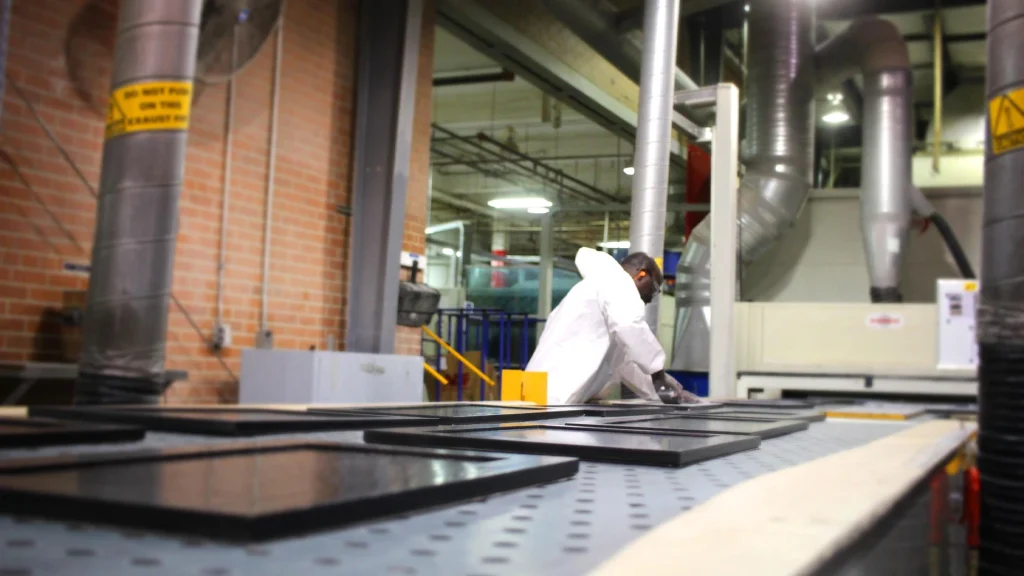
This is what I do every day. A premium finish is not luck. It is a process I control from material to install. Here are the steps I follow on every project.
Material confirmation
First, I confirm the material. MDF, plywood, solid wood, veneer, lacquer panel, PET, or melamine each take finish differently. I match the material to the target finish. The wrong base means a weak result, even with good paint.
Color and sample approval
Next, I do not just send a color code. I make a sample board or a sample door. I share photos and video. When needed, I ship a real sample. You approve the exact look before we run the order.
3D design and drawing check
For high-end homes and small projects, I check the 3D drawings first. We confirm sizes, door profile, countertop, hardware, kickboard, and edge details. This catches mistakes on paper, not after the cabinets ship.
Factory spraying and curing
Then we spray. We control dust and humidity. We control coating thickness. We seal the edges. We spray flat for an even film. We cure fully before the next step. A booth gives a result a jobsite cannot match.
QC inspection
After spraying, we inspect. We check color difference, orange peel, sagging, and pinholes. We check edge coverage, door gaps, and hardware holes. A door only passes when it meets the standard. We fix problems before packing.
Packing and export protection
For overseas projects, packing protects the finish. We guard door corners, edges, hardware, glass, and countertops. Good packing prevents damage in transit. A perfect finish means nothing if it arrives scratched.
Installation and after-sales
Last, I plan for install and after-sales. We provide install drawings and numbered parts. We keep the color code on file. We can send spare panels or a touch-up kit. Your project stays easy to maintain for years.
Most paint guides stop at the can. They are written by retailers, DIY blogs, or paint media. I work in a cabinet factory, so I see the full picture. The best paint for kitchen cabinets is only one part. The real goal is a controlled cabinet finish, from material to install. When I control each step, the color you chose still looks right years later. That is the difference between buying paint and buying a finished cabinet you can trust.
Conclusion
The best paint for kitchen cabinets depends on your cabinet, your use, and your goal. Want a finish that lasts? Contact George Construction Group, and let’s plan it together.
Build Your Vision with a True One-Stop Partner
The best paint for kitchen cabinets depends on your substrate, your usage, and your ultimate design goal. But sourcing a premium finish shouldn’t mean managing a dozen different suppliers. Whether you are developing a boutique apartment complex or a luxury villa, consistency is key.
From custom factory-finished cabinets to bespoke furniture, modern doors and windows, ADA-compliant sanitary ware, and architectural lighting, we provide a complete, integrated supply chain solution tailored to your exact specifications.
Ready for a finish that lasts and a supply chain you can trust? Fill out the form below to connect with our design and engineering team today.