Many homeowners search for above kitchen cabinet decor ideas and end up with a space that looks cluttered, dusty, or out of date. That gap above your cabinets can make or break the whole kitchen.
Above kitchen cabinet decor is not outdated by itself. What looks outdated is using too many small items, cheap signs, or random pieces just to fill the space. Treated as part of the full kitchen design, the area above your cabinets can look clean, modern, and intentional.
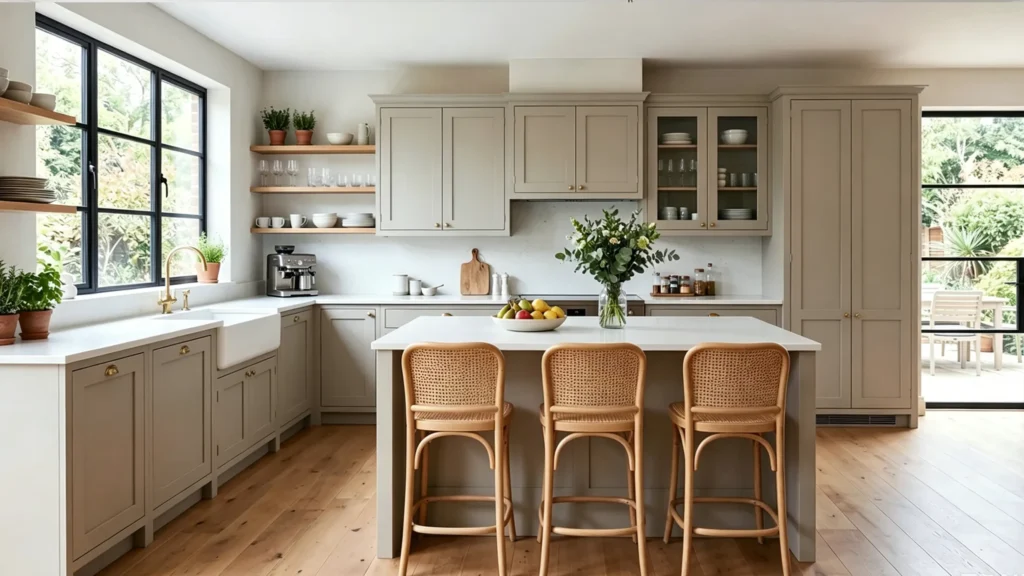
I have worked in cabinet production and full-house interior projects for years. One thing I see again and again is that homeowners treat the space above their cabinets as an afterthought. Some rush to fill it. Others ignore it completely. Both approaches can go wrong. The right answer depends on your ceiling height, kitchen layout, cooking habits, and how much maintenance you are willing to do.
Should You Decorate Above Kitchen Cabinets or Leave Them Empty?
Most guides tell you to decorate. But in many kitchens, leaving it empty is actually the smarter choice. Knowing which situation you are in matters more than following a trend.
Decorating above kitchen cabinets works best when the ceiling is high, the wall looks unfinished, or the kitchen is open-plan and needs visual layers. Leaving it empty works best in modern kitchens, compact spaces, or anywhere near a heavy-use stove where grease builds up fast.
When Leaving It Empty Is the Right Call
A modern kitchen with clean lines often looks better without anything on top. If your cabinets already have crown molding or built-in lighting, adding decor on top can compete with those details. Small kitchens also benefit from an empty top. Less visual clutter makes the space feel larger and calmer.
When Decorating Makes Sense
If your ceiling is high and the gap above the cabinets looks too tall or bare, simple large-scale decor helps fill the proportion. Open-plan kitchens that connect to living spaces also benefit from some visual layering above the cabinets. It ties the room together without needing a full renovation.
When You Should Avoid It Entirely
If you cook with high heat and oil often, the area above your cabinets will collect grease. Decor placed there becomes hard to clean and can look grimy within months. If no one in your household is willing to do regular cleaning up there, it is better to keep it empty or use a filler panel.
| Situation | Recommendation |
|---|---|
| Looks clean and minimal | Leave it empty |
| Looks unfinished | Add trim or lighting |
| Too tall and blank | Use large-scale decor or stacked cabinets |
| Near stove, heavy cooking | Avoid decor entirely |
On Houzz, many users discussing high-end kitchens say they prefer leaving the top empty. Their reasoning is clear: putting random objects up there makes even an expensive kitchen look busy and cheap. That perspective matches what I have seen in the projects I have worked on. Empty space, done with intention, reads as confidence in the design.
What Should You Put Above Kitchen Cabinets for a Modern Look?
The most common mistake is treating the space like a shelf for anything that does not have a home. For a modern kitchen, what you place there must be chosen with proportion, material, and maintenance in mind.
For a modern look, use a small number of large-scale items in a consistent color palette. Good options include tall ceramics, matching baskets, framed artwork, carefully chosen faux greenery, or soft LED lighting. The goal is calm, edited, and easy to clean.
Large Vases or Ceramics
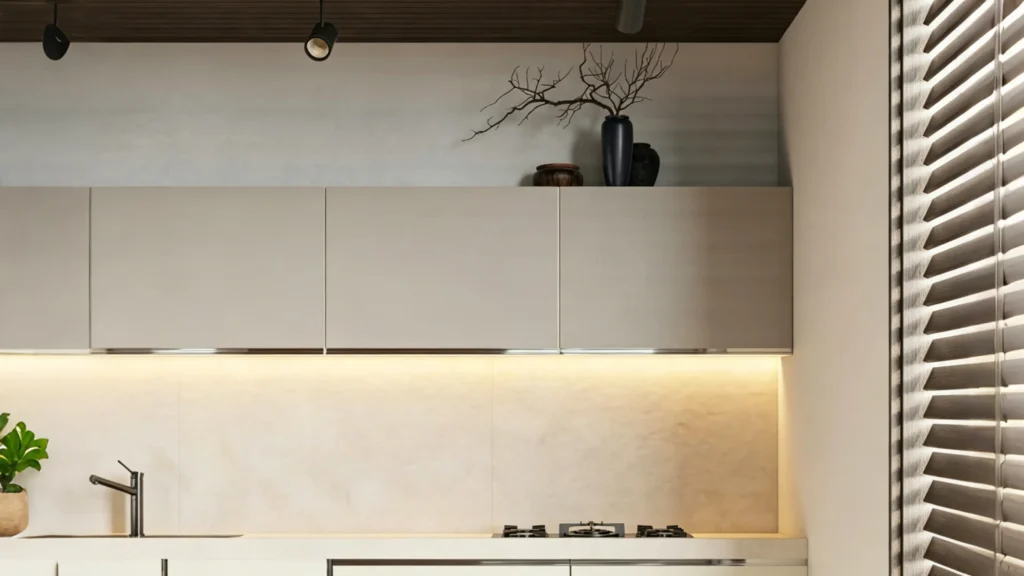
One or two tall vases in a neutral tone work well above cabinets in a white or wood-tone kitchen. The key is scale. Small vases up high look lost. Go large, keep it minimal, and match the color to the cabinet or wall.
Matching Baskets for Storage
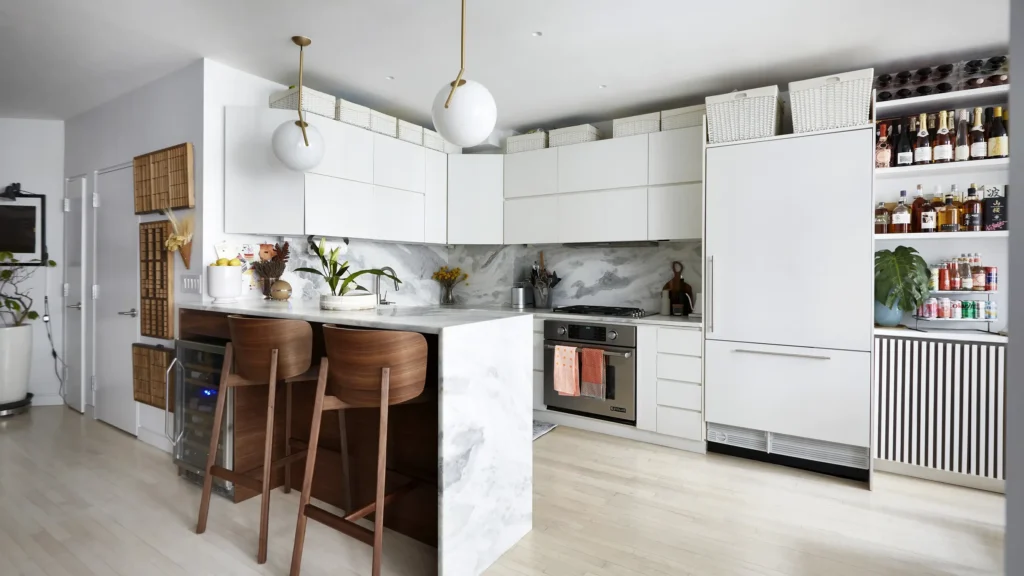
Baskets can store low-use items while still looking intentional. But they only work if you keep the size, color, and material consistent. Mixed baskets of different shapes and weaves will look like clutter. Lined, lidded options are also easier to keep clean.
Framed Art or Leaning Artwork
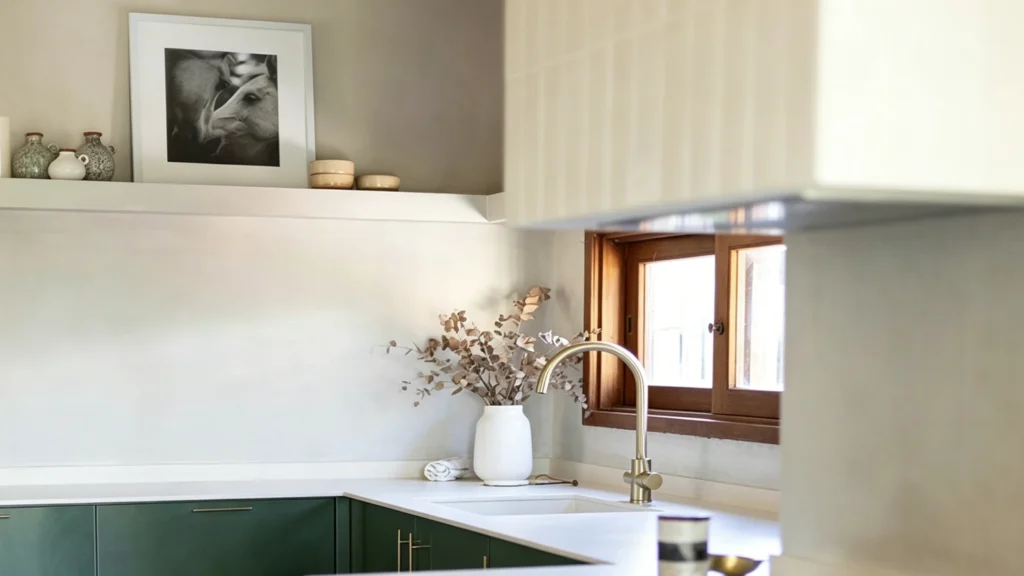
In an open kitchen, framed artwork above the cabinets can bring in color or texture. Keep it away from the stove side. Oil and steam will damage art and frames over time. Larger pieces in simple frames work better than a collection of small prints.
Faux Greenery, Used Carefully
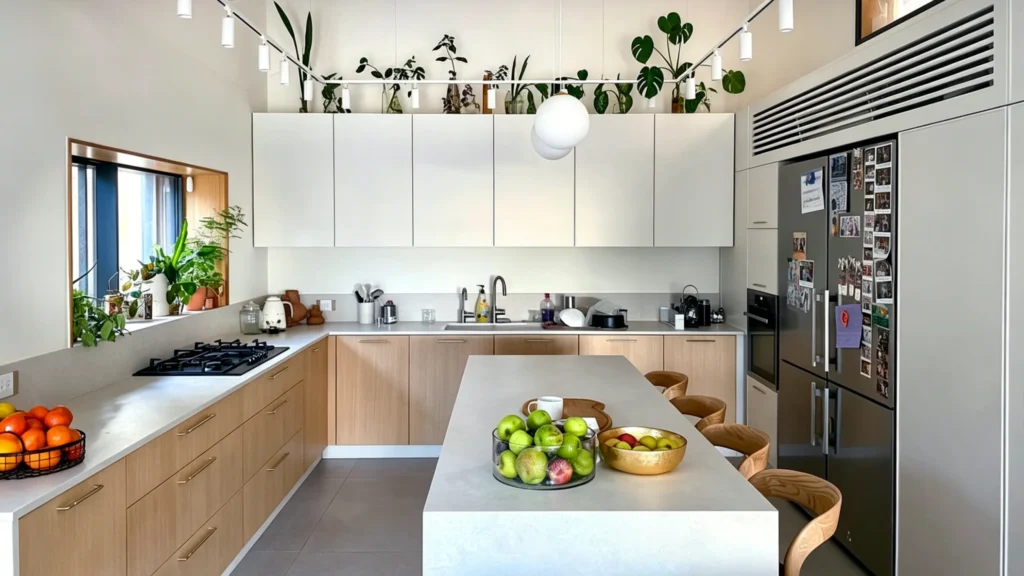
Faux greenery is fine, but old-style trailing ivy looks dated. Choose a high-quality, low-density piece as a single accent rather than a draped arrangement. One clean stem in a tall vase is much more modern than a full garland across the top.
Soft LED Lighting
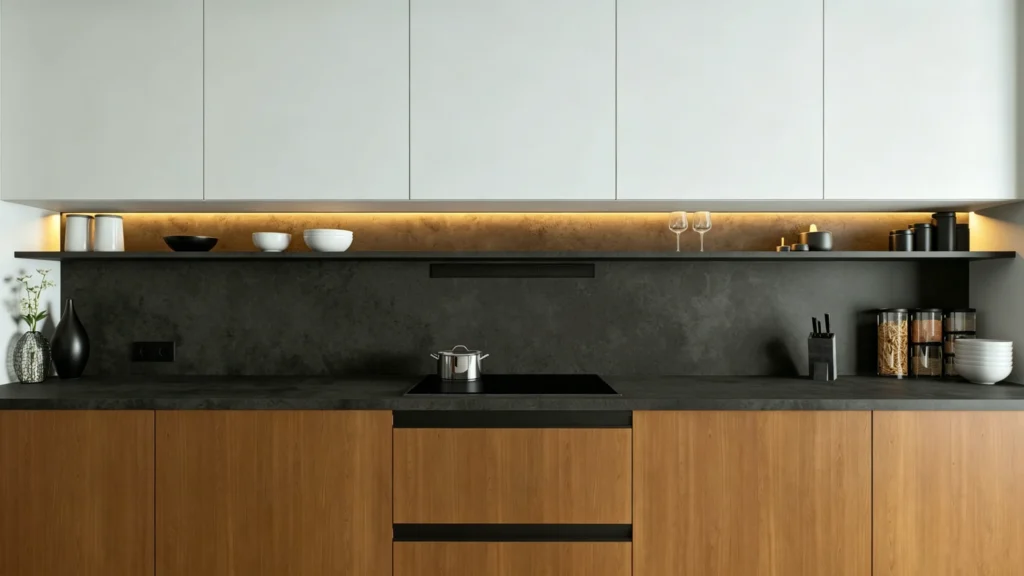
A well-placed LED strip above the cabinets does more for a modern kitchen than any decor item. It adds warmth, depth, and makes the ceiling feel intentional. This is one of the best kitchen cabinet decor ideas for homeowners who want impact with low maintenance.
Backsplash or Wallpaper Extension
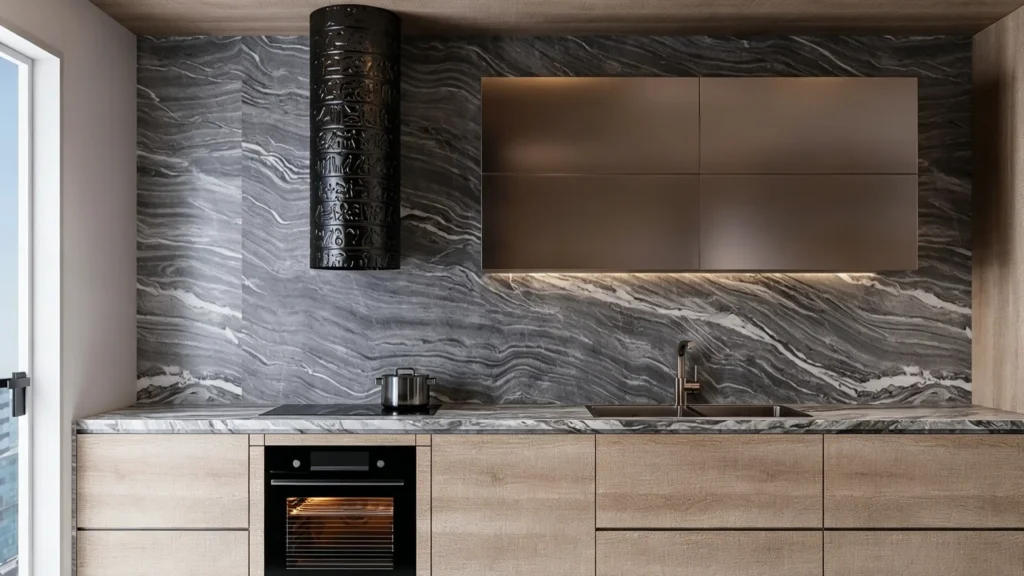
If you want a finished wall without placing any objects up top, extending the backsplash tile or adding wallpaper above the cabinets is a clean solution. It fills the space visually without collecting dust.
Modern high-end kitchens are defined by restraint. The space above the cabinets should feel like part of a plan, not an overflow zone. Every item you place there should earn its spot based on proportion, material quality, and how easy it is to keep clean over years of real use.
What Should You Not Put Above Kitchen Cabinets?
Knowing what to avoid is just as important as knowing what works. Some choices look fine in photos but create real problems in everyday life.
Avoid placing many small items, old-style fake vines, word signs, open food containers, heavy appliances, or delicate glassware above your cabinets. These choices either collect grease and dust quickly, create safety risks, or make even a well-designed kitchen look cluttered and dated.
Too Many Small Decorative Items
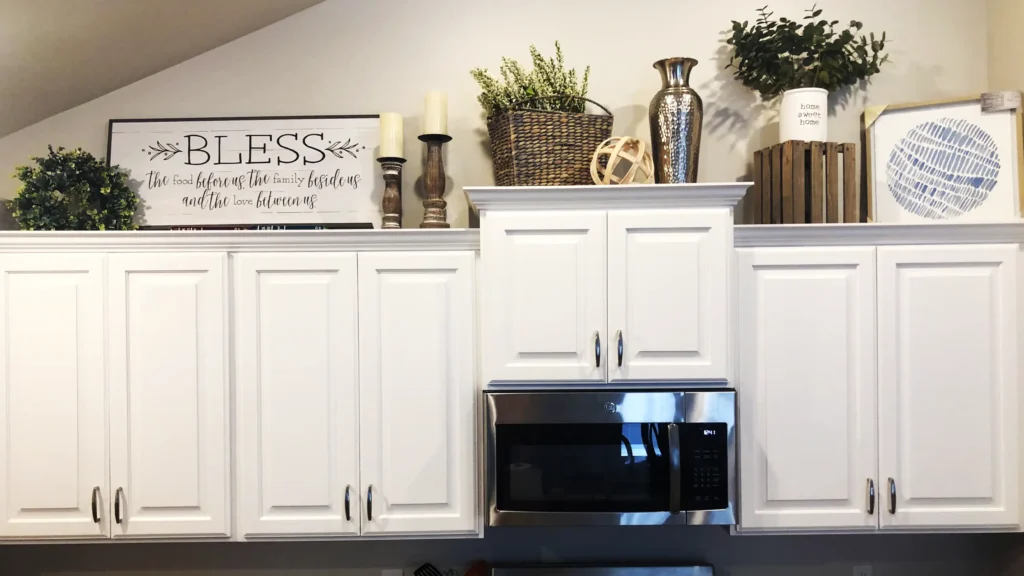
A row of small figurines, mismatched frames, or a mix of tiny plants and candles looks chaotic from across the room. It also collects dust at a rate that is very hard to manage. This is one of the most common decorating mistakes I see in real kitchen projects.
Fake Ivy and Trailing Greenery
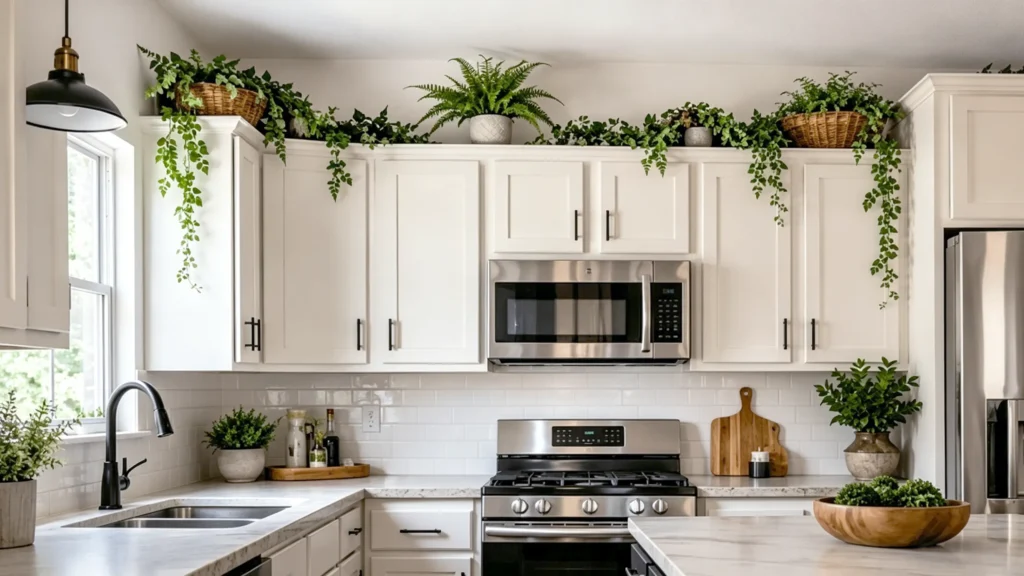
Old-style cascading fake vines were popular in the early 2000s. Today they signal an outdated look. They trap grease, fade with light, and are difficult to clean. If you want greenery, choose a modern, minimal version instead.
Word Signs and Farmhouse Lettering
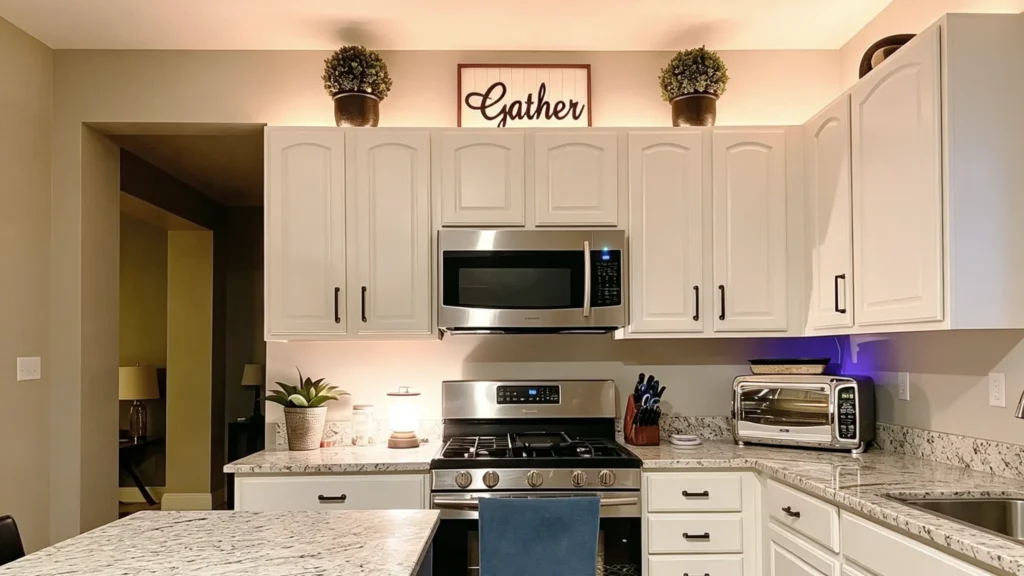
“Eat,” “Gather,” and “Kitchen” signs have been overused for years. In a space that is otherwise refined, they pull the whole look backward. They also tend to collect grease faster than you expect.
Open Food, Spices, or Loose Items
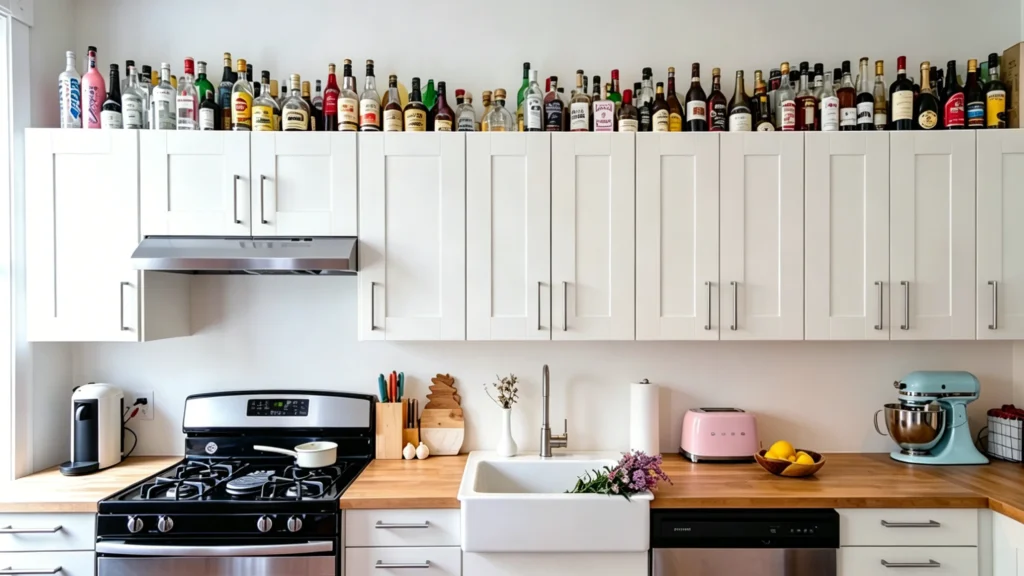
Storing food or unsealed spices up top is not a good idea unless everything is in matching, sealed containers. Loose items attract pests, absorb kitchen odors, and look messy from any angle.
Heavy Appliances
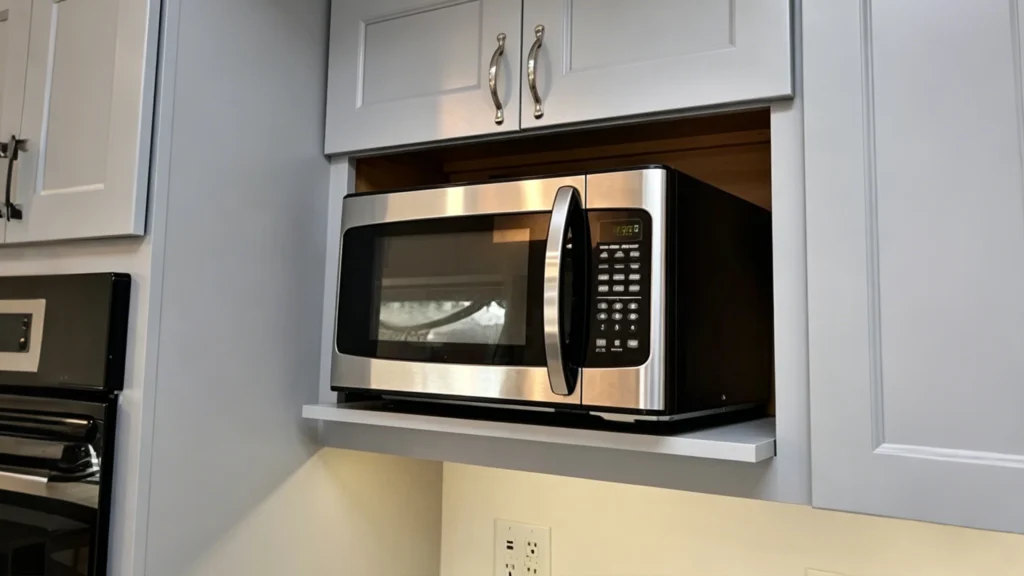
Reaching overhead for a heavy appliance is a safety risk. It is also hard on your joints and back over time. Keep appliances at counter height or in a dedicated storage area.
Fabric, Rattan, or Paper Near Heat Sources
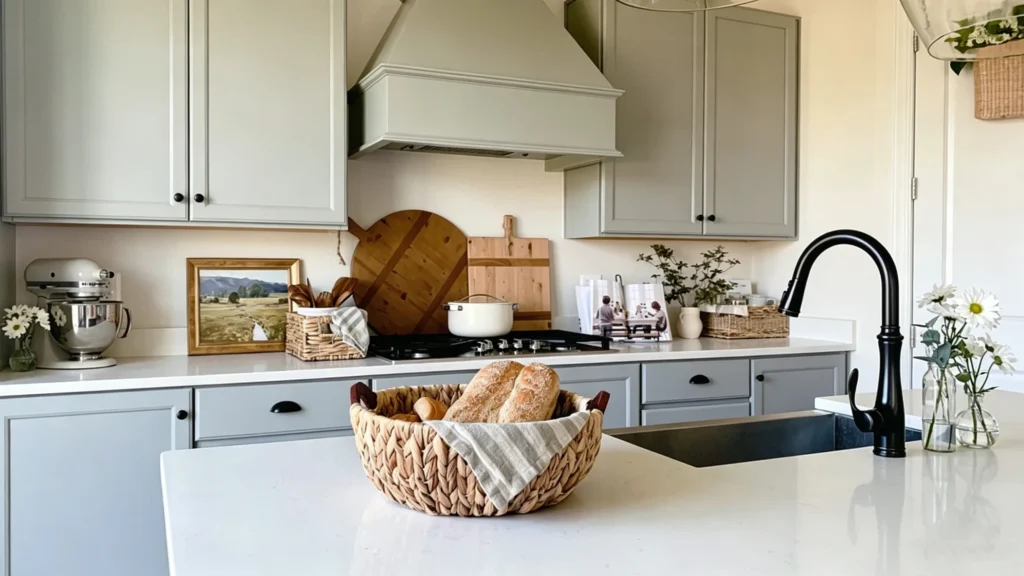
Woven baskets, fabric decor, or paper items placed near the stove or range hood area can absorb smoke, trap grease, and in some cases create a fire risk. Keep soft materials away from any heat source.
Reddit renovation threads and Houzz discussions both return to the same problem: grease and dust combine on top of kitchen cabinets to form a layer that is very hard to clean. Users repeatedly describe small decor items as “dust collectors” that they end up removing anyway after a year. I always tell clients — think about what it will look like after two years of cooking, not just in the reveal photos.
How Do You Handle High Ceilings or a Large Gap Above Kitchen Cabinets?
A large gap above the cabinets is one of the most common challenges in taller homes. Decorating alone rarely solves it. The right approach depends on exactly how much space you are dealing with.
For a gap under 6 inches, use trim or filler panels rather than decor. For 8 to 18 inches, lighting or low-profile decor works well. For gaps over 18 inches, stacked cabinets, open shelving, or architectural trim will look more finished and add real value to the kitchen.
Source:
https://www.pinterest.com/pin/91057223705411173/
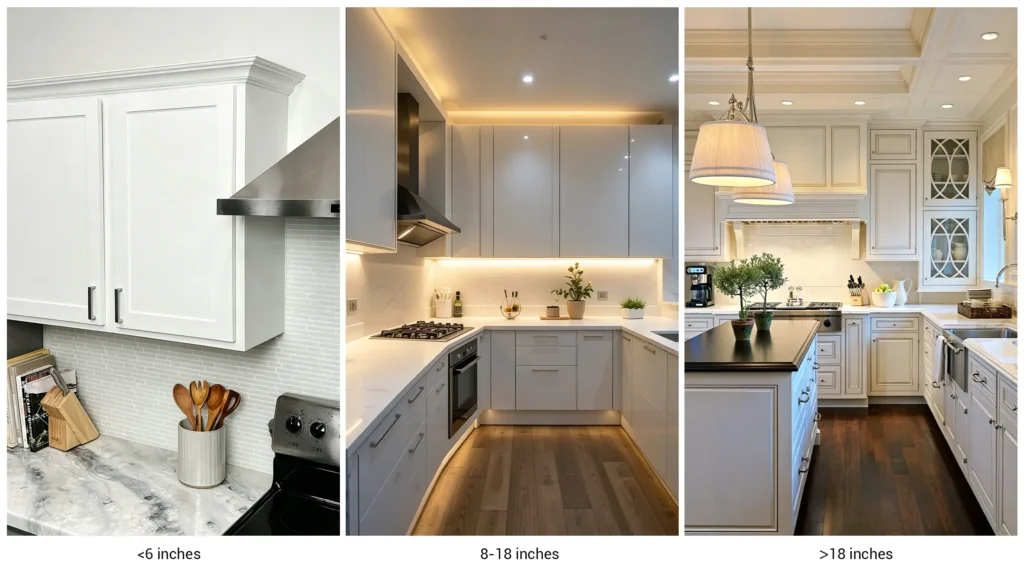
Small Gap Under 6 Inches
This space is too small to decorate and too visible to leave raw. Crown molding, a filler panel, or a soffit cover gives a clean, finished look without drawing attention to the gap. Trying to place objects here usually looks forced.
Medium Gap: 8 to 18 Inches
This range gives you real options. A low-profile LED strip, a single row of ceramic pieces, or a backsplash extension all work here. You can also paint the wall the same color as the cabinets to reduce visual contrast and make the gap less noticeable.
Large Gap Over 18 Inches
Decor alone will not fill this well. The space is too large for a few vases to look proportionate. Stacked cabinets, open display cubbies, or built-in shelving will look much more finished. For decorating above kitchen cabinets with high ceilings, architectural trim or ceiling-height custom cabinetry is often the most refined solution.
Vaulted or Sloped Ceilings
Not every kitchen needs to fill the space all the way to the peak. In a vaulted ceiling, the angled line is part of the architecture. Fighting it with stacked cabinets or full-height panels can look awkward. Work with the proportions rather than against them.
10 to 12 Foot Ceilings
At this height, double-stacked upper cabinets with glass-door display sections are a strong option. A light strip between the upper and lower cabinet stacks adds depth. A solid panel above the top cabinet keeps the look clean and reduces dust collection.
Ceilings With Exposed Beams
On Houzz, users with 12-foot ceilings and exposed beams frequently note that stacking cabinets all the way to the beam line does not always work. The beams become part of the visual rhythm. Leaving open space below the beams can actually look more intentional and proportionate than forcing the cabinets to fill the entire height.
The decision about how to handle height is really a proportions decision. I approach every tall kitchen by asking: what does the eye need to feel settled? In some cases that means filling the space. In others, it means leaving it open and letting the ceiling height become an asset instead of a problem. There is no single rule, but there is always a right answer for each specific kitchen.
Is It Better to Extend Kitchen Cabinets to the Ceiling Instead of Decorating?
If you are renovating or building from scratch, you have more options than just styling the existing space. Extending cabinets to the ceiling is a different kind of solution entirely — and for many homeowners, it is the better one.
Extending kitchen cabinets to the ceiling creates a cleaner, more finished look and eliminates the dust and grease problem permanently. It costs more than decorating, but it adds real storage and long-term value. For high-end kitchens, it is often the most practical and refined choice.
Comparing Your Options
| Option | Best For | Pros | Cons |
|---|---|---|---|
| Decor above cabinets | Low budget, no renovation | Fast, affordable, flexible | Collects dust, can look dated |
| Leave it empty | Modern kitchens with good proportions | Clean, refined, low cost | May look unfinished in some spaces |
| Crown molding or trim | Small gaps, traditional kitchens | Neat finish, medium cost | Requires precise installation |
| Filler panel or soffit | Closing the top completely | Less dust, more unified look | Can look heavy if not designed well |
| Stacked cabinets | High ceilings, high-end kitchens | More storage, more finished | Higher cost, needs accurate drawings |
| Floor-to-ceiling custom cabinets | New builds or full renovation | Most refined, fully customized | Requires precise ceiling height and flat soffits |
When Extending Cabinets Is Worth It
If you are doing a full kitchen renovation and your ceiling is 9 feet or higher, extending the cabinets is almost always worth the extra cost. It removes the above-cabinet problem entirely. It adds real storage for items you rarely use. And it creates the kind of seamless, built-in look that lifts the entire kitchen.
When It May Not Be Worth It
If your ceiling is exactly 8 feet, floor-to-ceiling cabinets can feel tight and proportionally heavy. In older homes with uneven ceilings or soffits that are not perfectly level, fitting cabinets flush to the ceiling requires careful measurement and skilled installation. The gap between the cabinet top and a wavy ceiling can look worse than the original space.
Pain Point: A luxury villa client faced uneven 11-foot sloped ceilings and worried that standard double-stacked upper cabinets would create messy gaps and trap heavy kitchen grease.
Solution: George Team customized millwork drawings with precise millimetric factory filler panels, incorporating seamless integrated smart LED tracks to balance the slope architecture.
Result: Achieved a flawless, zero-gap integrated look that expanded hidden storage by 35% with absolute zero-maintenance dusting zones.
What I See in Factory Production
From a cabinet production perspective, stacked cabinets require separate door panel sizing for the upper section. The door height ratio matters a lot. A top cabinet section with very short doors looks awkward. LED strip precuts and panel thickness for the ceiling filler all need to be planned before the order is placed, not after installation begins.
Expert Solution
Explore George Custom Cabinets →Reddit renovation discussions come back to this question often. Users ask whether to add stacked cabinets to an 8-foot ceiling. The answer is almost always: it depends on the door proportion, the cabinet depth, and whether the ceiling is even. The best decisions in kitchen design are made with full measurements and a clear sense of the final proportion, not just a budget number.
Conclusion
Above kitchen cabinet decor is not outdated. Poor choices and poor execution are. Treat the space with intention and it will serve your kitchen well for years. At George Construction Group, we help homeowners make decisions like these with factory-level knowledge and full project support. Reach out at georgeconstuctiongroup.com to talk through your kitchen project.
Bring Your Whole-House Vision to Life Without the Hassle
Managing multiple vendors for cabinets, furniture, doors, windows, and sanitary ware often leads to style mismatches, budget overruns, and installation nightmares on site.
At George Construction Group, we are your one-stop solution for luxury villas and full-house apartment projects. We handle the strict factory engineering and modern spatial design to guarantee a flawless finish across every room.
Tell us about your project below, and let’s build something extraordinary. ↓