Short Answer: A whirlpool bathtub is only worth installing when it is planned early, fits your space, and will actually be used regularly.
Hi, I’m Helen. Over the past ten years in the sanitary ware industry, I’ve helped homeowners across different regions design bathrooms that actually work in everyday use. When you’re planning a full-house renovation or building your forever home, the bathtub isn’t just a fixture. It’s an investment in your daily comfort and long-term living experience.
But is it the right investment for you? The real challenge when deciding on a whirlpool bathtub is balancing your budget, available space, and actual usage frequency. In this guide, I’ll help you understand what really matters in renovation planning, helping you avoid common traps and make the best choice for your home.
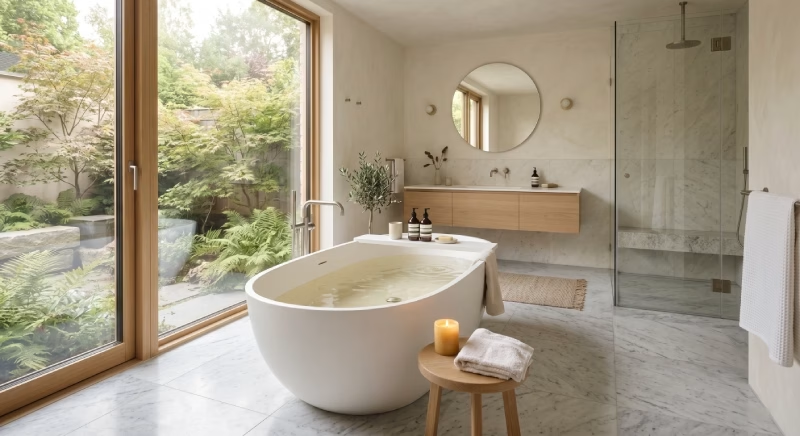
If you’ve ever stayed at a high-end spa, you know the feeling of warm water pulsing against your tired muscles. That’s the magic of this type of tub.
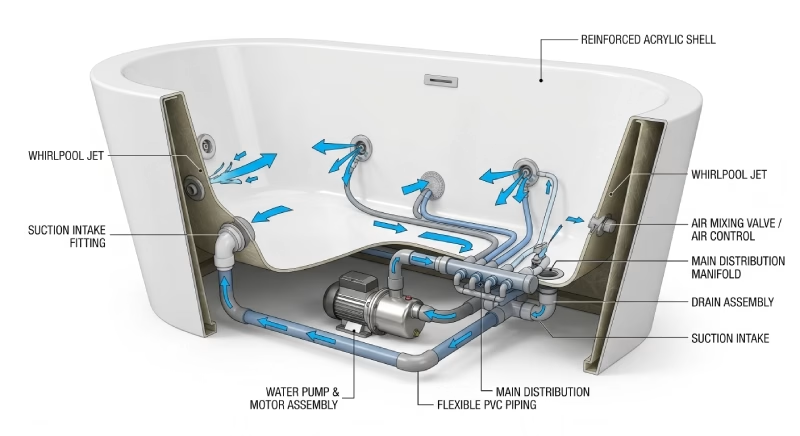
But what is a whirlpool bathtub exactly? It is a bathtub equipped with a pump and a series of jets. Unlike a standard tub that you simply fill with water, a whirlpool system pulls the water from the tub, runs it through a pump, and shoots it back out through adjustable jets.
This creates a dynamic massage effect known as hydrotherapy. The core difference between this and a standard tub is the physical movement of the water. A regular tub is for static soaking; a whirlpool is for active recovery. This is what ultimately determines whether it functions as a simple bathing basin or a complex therapeutic system.
What is the Difference Between a Whirlpool, Jacuzzi, and Regular Bathtub?
I get this question often from homeowners: “What is the difference between whirlpool and bathtub, and isn’t a Jacuzzi the same thing?” Let’s clear the air.
Whirlpool vs. Jacuzzi Bathtub
“Jacuzzi” is a brand name often used for whirlpool-style bathtubs. Every Jacuzzi is a whirlpool, but not every whirlpool bathtub is a Jacuzzi. When looking at a whirlpool vs jacuzzi bathtub, you are simply comparing a general product category to one specific brand.
Whirlpool vs. Regular Bathtub
Homeowners are usually not choosing between brands, but between system complexity, installation requirements, and maintenance effort.
| Feature | Regular Soaking Tub | Whirlpool Bathtub |
|---|---|---|
| Primary Function | Deep soaking, static relaxation | Deep tissue massage, hydrotherapy |
| System Structure | Simple basin | Pump, internal piping, jets, suction |
| Installation | Basic plumbing | Plumbing + dedicated electrical system |
| Maintenance | Low (wipe and go) | Moderate (system flushing required) |
| Experience | Quiet and calm | Therapeutic, active water movement |
Is a Whirlpool Bathtub Right for Your Lifestyle and Home?
Not every home needs a whirlpool. I’ve often advised homeowners not to install a whirlpool bathtub when it doesn’t match their lifestyle or space conditions.
When it makes sense to install:
You frequently bathe for relaxation: If you’re a multiple-times-a-week bather, the investment pays off.
Upgrading a master suite: If you want a true spa-like retreat for your full-house project, this serves as the centerpiece.
You have specific physical needs: Hydrotherapy is excellent for muscle recovery, joint pain, and physical rehabilitation.
You are prepared for full installation work, including plumbing and electrical planning.
When you should probably skip it:
You rarely take baths: If you are a “shower person,” the tub will just collect dust.
Space is highly restricted: Small bathrooms make it difficult to fit the tub and the necessary maintenance access panels.
You dislike maintenance: If you won’t commit to running cleaning solutions through the jets, biofilm can build up.
It’s a short-term or investment property: The return on investment isn’t always guaranteed for rentals or quick flips.
In most residential projects, a standard bathtub delivers better value if these conditions are not fully met.
How Much Does a Whirlpool Bathtub Cost to Buy and Install?
Budgeting is where most homeowners get surprised. The cost is broken down into three main areas.
1. Product Price
Entry-level: Basic systems start around $800 – $1,200.
Mid-range: High-quality acrylics with ergonomic jet placement (like those in our George Group full-house packages) usually range from $1,500 – $3,500.
High-end: Models with inline heaters, LED chromotherapy, and silent pumps often exceed $5,000.
2. Installation Costs
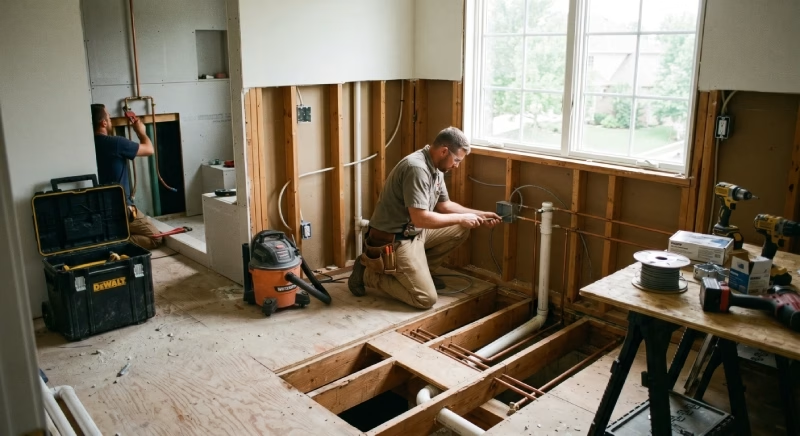
This is the “hidden” part. You’ll need a licensed electrician to run a dedicated GFCI circuit, which can cost $500 to $1,500 depending on your home. You also need to ensure your floor structure can handle the weight of the tub, the water, and the bather.
3. Long-term Usage Costs
You’ll see a slight bump in your electric bill. You will also need to purchase specialized cleaners to flush the internal pipes regularly.
In most renovation projects, the total installed cost is often double the price of the bathtub itself.
How Much Space Do You Need for a Whirlpool Bathtub?
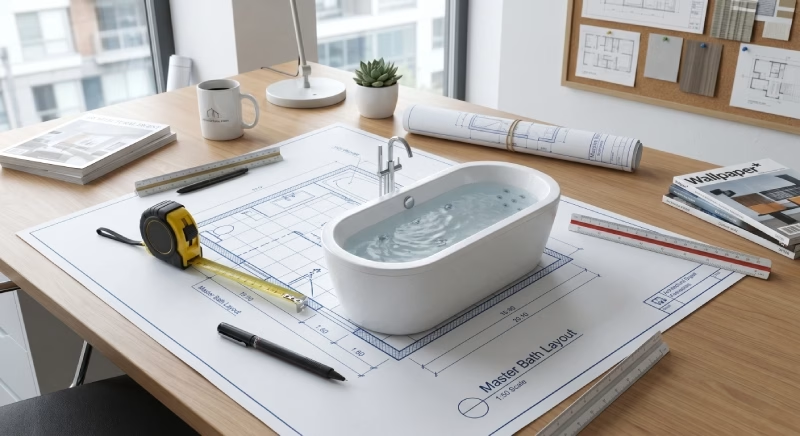
Size matters. A standard alcove tub is typically 60 inches long. However, a whirlpool bathtub often performs better when it’s slightly wider or deeper to accommodate the jet hardware and provide enough room to stretch out.
In real renovation projects, layout drawings must be prepared before installation to ensure proper fit and maintenance access. If you are replacing an existing tub, you must check if the new pump will be reachable. This is exactly why, in George Group projects, we emphasize space calculation during the earliest design phases.
What Installation Requirements Must You Plan Ahead For?
If you take only one thing from this article, let it be this: plan your utilities before you tile your walls.
Dedicated Electrical Circuit: A whirlpool bathtub needs its own breaker. You cannot simply plug it into a standard bathroom outlet.
The Access Panel: You should have a way to reach the pump if it ever needs repair.
Ground Support: A filled whirlpool tub is incredibly heavy. Older homes may require floor joist reinforcement.
Water Heater Capacity: A massive tub is useless if your water heater can only fill a third of it before turning cold.
Most failures happen during planning, not product selection.
What Are the Best Alternatives to a Whirlpool Bathtub?
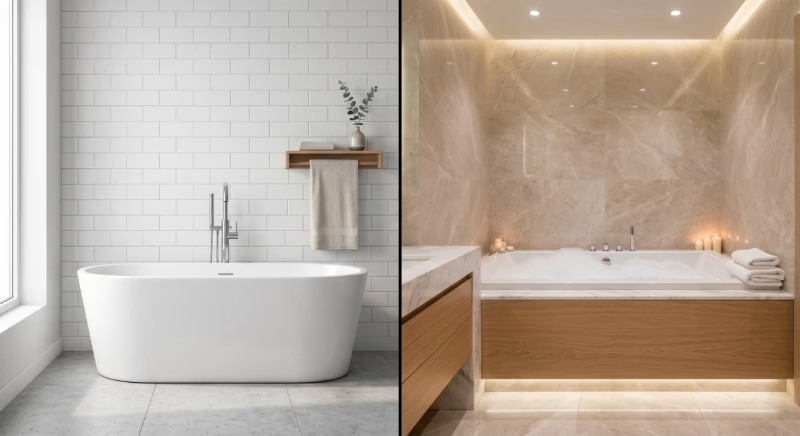
Is a whirlpool the only way to relax? Not necessarily. Depending on your needs, other options might be better suited for your home.
Soaking Bathtub
Simple, elegant, and timeless. It costs less to buy and install, and requires zero specialized maintenance. Best for those who just want peace and quiet.
Air Tub
Instead of shooting streams of water, an air tub blows warm air bubbles from the bottom. It provides a gentler feeling and is generally easier to keep clean since it lacks internal water pipes.
For many homeowners, simpler bathtub options can provide most of the comfort with far fewer technical requirements.
What Are the Pros and Cons of a Whirlpool Bathtub?
Pros:
Muscle Relaxation: There is no substitute for the pressure of a water jet on a sore back.
Enhanced Living Experience: It transforms a basic bathroom into a personal sanctuary.
Potential Home Value: In luxury markets, a high-end master bath can increase property appeal.
Cons:
Higher Costs: Both upfront and in installation.
System Complexity: Requires precise electrical, structural, and plumbing coordination.
Ongoing Maintenance Burden: You must run a cleaning cycle regularly to prevent residue buildup inside the hidden pipes.
If you’re comparing different hydrotherapy options before making a final decision, this detailed guide breaks down the real differences between whirlpool, air tub, and Jacuzzi systems: Whirlpool vs Jacuzzi vs Air Tub: Which One Fits Your Home?
What Are the Common Mistakes to Avoid When Installing a Whirlpool Tub?
Over the years, I’ve seen planning errors cost homeowners thousands of dollars in rework:
Ignoring the Electrical Setup: Assuming existing wiring can handle a high-power pump.
Forgetting the Access Panel: Tiling a tub entirely shut, meaning the tile has to be smashed if a $50 part breaks.
Skipping the Inline Heater: Water in a whirlpool cools down faster. An inline heater prevents you from having to constantly add hot water.
Focusing Only on Price: Ignoring the structural reinforcement and electrical upgrade fees.
These are common issues seen in real-world renovation projects, not rare exceptions.
Frequently Asked Questions (FAQ)
1. Can you use bath bombs, bubble bath, or Epsom salts in a whirlpool tub?
No. Oils and solids can build up inside the pump system over time, causing blockages and bacterial growth. Standard bath bombs, oils, and bubble baths are the biggest enemies of a whirlpool system. If you want to use bath products, only use liquids specifically labeled as safe for whirlpools.
2. How long does a whirlpool bathtub last?
With proper care, the acrylic shell of a high-quality tub can easily last 15 to 20 years. However, the mechanical parts—like the pump and the motor—typically have a lifespan of 5 to 10 years before they may require servicing or part replacement. Replacement cost is often a key consideration in long-term planning.
3. How often should I flush and clean the jet system?
Even if you only use the tub for a quick soak without turning the jets on, bathwater still enters the jet nozzles. Because of this, you should run a dedicated cleaning cycle (using a whirlpool-specific cleaner) at least once a month.
Final Decision: Should You Choose a Whirlpool Bathtub?
Deciding on a whirlpool bathtub is a major step in your home renovation journey. It should be planned as part of the renovation system, not added as an afterthought.
When it is worth installing: You are doing a full-house renovation, you can plan the plumbing and electrical from scratch, and you truly value a daily or weekly hydrotherapy experience.
When it is not recommended: You are on a tight budget, doing a quick cosmetic flip, or simply don’t have the space to accommodate the pump and access panel.
If you are planning a full renovation, consulting an experienced supplier like George Group can help ensure proper technical and layout planning before construction begins.
The best bathtub decision is not about luxury, but about fit, usage, and lifecycle cost. Good design means the product serves your lifestyle, rather than you serving the product
References
To ensure the highest accuracy for your renovation planning, the data and technical advice in this guide are supported by trusted home improvement resources:
Installation & Requirements: This Old House: How To Install a Jetted Tub – Comprehensive guidelines on the necessary plumbing, dedicated electrical circuits, and structural floor support for whirlpool systems.
Cost Data: This Old House: How Much Does a Jacuzzi Bathtub Cost? – A detailed breakdown of actual jetted tub prices, professional labor fees, and hidden renovation costs.
Maintenance & Care: Bob Vila: How to Clean a Jetted Tub – Expert advice on the required cleaning cycles and avoiding standard bath products to prevent internal pipe blockages.