The best way to paint kitchen cabinets can feel simple until peeling, brush marks, and disappointing painting kitchen cabinets ideas before and after photos make the project look risky fast.
Yes, painted cabinets can look close to factory-finished cabinets when the surface is cleaned, sanded, primed, sprayed, cured, and checked well. Still, a true factory finish is more stable because the full material, coating, drying, and quality process is controlled.
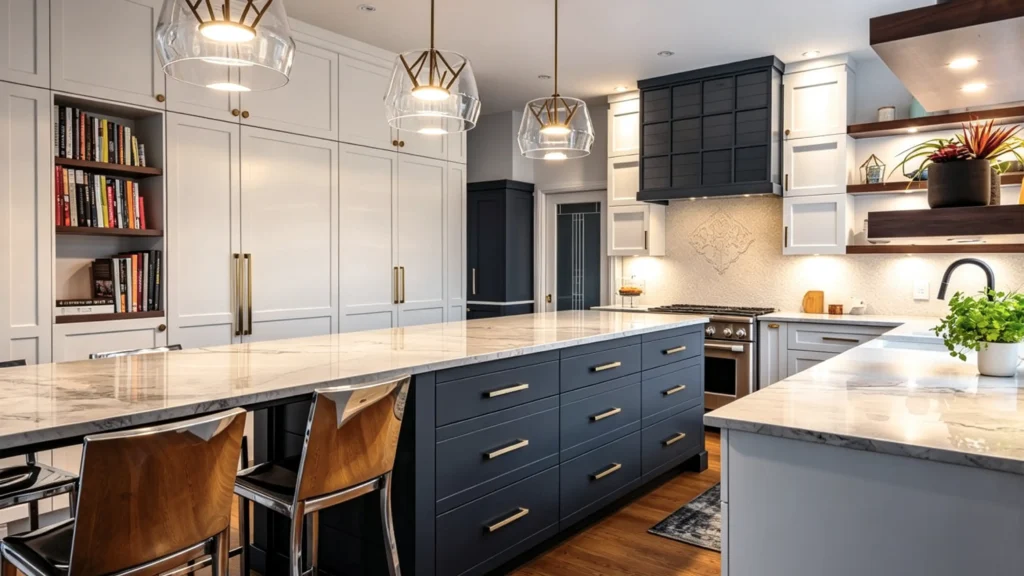
I have seen many cabinet projects look beautiful in photos but fail at the edges after daily use. In my factory and project work, I learned that paint is only one part of the result. The real question is whether the cabinet surface can hold that finish for years.
What Is the Best Way to Paint Kitchen Cabinets?
A kitchen cabinet painting job can look easy, but one missed step can trap grease, weaken adhesion, and turn a clean color update into peeling.
The best way to paint kitchen cabinets is to remove doors, label parts, degrease, sand or degloss, repair defects, prime, sand lightly, apply thin coats, and allow full curing before reinstalling.
Remove, Label, and Clean
I always start by removing doors, drawers, hinges, and handles. I label each door and hinge position before any work begins. If I skip this, the doors may not align again, and paint can build up around hinge areas.
Sand, Repair, and Prime
Kitchen cabinets are not walls. They collect oil, hand sweat, cleaner residue, and daily impact. I sand or degloss the surface so primer can grip. I also repair dents, cracks, and open grain before applying a bonding primer.
Paint Thin Coats and Let Them Cure
I prefer thin coats of cabinet-grade paint instead of one heavy coat. Thick paint can look soft and mark easily. A finish may feel dry in one day, but it still needs curing time before cleaning, handles, and hard use.
| Step | Why It Matters |
|---|---|
| Degrease | Prevents oil from sitting under paint |
| Sand or degloss | Helps primer hold |
| Prime | Blocks stains and improves adhesion |
| Cure | Reduces marks, chips, and early wear |
When people ask whats the best way to paint kitchen cabinets, I do not start with the paint brand. I start with preparation. I have seen cabinets fail even after sanding, primer, and three coats. That tells me the issue is often surface bond, old grease, drying time, or material limits.
Should You Spray, Roll, or Brush Kitchen Cabinets?
A sprayer sounds like the magic answer, but a poor spray job can still show dust, uneven gloss, overspray, and weak edges.
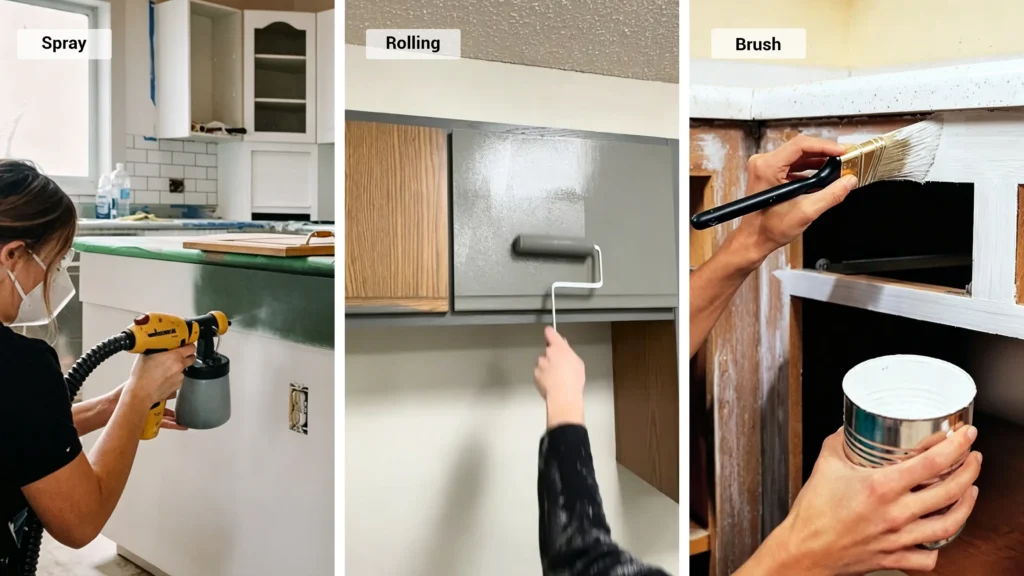
Spraying gives the smoothest finish, rolling is more DIY-friendly, and brushing works best for corners and details. But the tool does not create a factory finish by itself.
Source:
https://www.extension.purdue.edu/extmedia/ncr/ncr-135.html
Spray Finish
Spray painting can create a smooth and even face, so it is often the best way to paint kitchen cabinets white. It needs masking, ventilation, skill, and a clean space. In a lived-in kitchen, dust and overspray are real problems.
Roller Finish
A fine roller can work for a careful DIY project. It costs less and needs less equipment. Still, even good rollers can leave light texture. This may be acceptable for a budget refresh, but it is not the same as a shop-sprayed door.
Brush Finish
A brush is useful around frames, grooves, and small detailed areas. It is not my first choice for large flat cabinet doors when the owner wants a smooth modern surface. Brush marks often come from thick coats and fast drying paint.
| Method | Finish Quality | Skill Needed | Best Use |
|---|---|---|---|
| Spray | Highest | High | Professional or workshop |
| Roller | Medium | Medium | DIY repainting |
| Brush | Low to medium | Medium | Edges and details |
The best way to paint kitchen cabinets spray or brush depends on the target result. Factory spray lines control distance, dust, coating thickness, and drying position. A home sprayer cannot copy that alone. I see spraying as one tool, not the whole finish system.
Can You Paint Cabinets Without Sanding or Removing Doors?
Quick cabinet painting promises sound attractive, but skipping preparation can make the finish weak before the kitchen returns to normal use.
You can reduce sanding in some cases, but I do not suggest skipping surface preparation. Painting without removing doors is possible, but it usually lowers edge quality, back-side coverage, and hinge accuracy.
Without Sanding
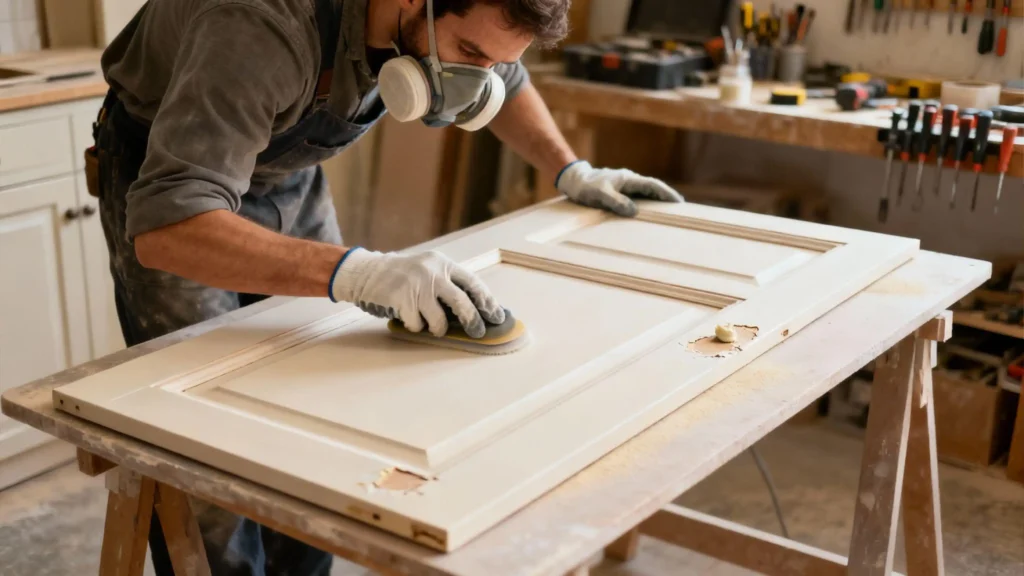
The best way to paint kitchen cabinets without sanding only works in limited cases. The surface must be clean, dull, and compatible with a strong bonding primer. Glossy old paint, grease, and unknown coatings still need sanding or deglossing.
Without Removing Doors
How to paint kitchen cabinets without removing them is useful for a short-term rental refresh. It is not my choice for a high-end kitchen. Paint can collect along door edges, hinge points, and hidden corners, and those areas wear first.
Without Primer
Skipping primer is the highest-risk shortcut. Old wood, dark cabinets, glossy doors, and oily kitchen surfaces often need primer. Without it, the topcoat may scratch off with a fingernail, even if the color looks smooth at first.
Many no-sanding articles make the job sound too easy. I see this as a low-budget, short-term method, not the best path to a premium look. If the goal is close to factory-finished cabinets, door removal, cleaning, light sanding, and primer are almost impossible to skip.
Can Painted Cabinets Really Look Like Factory-Finished Cabinets?
A cabinet can look perfect in one front photo, but the edges, handle areas, and bottom lines often tell the real story.
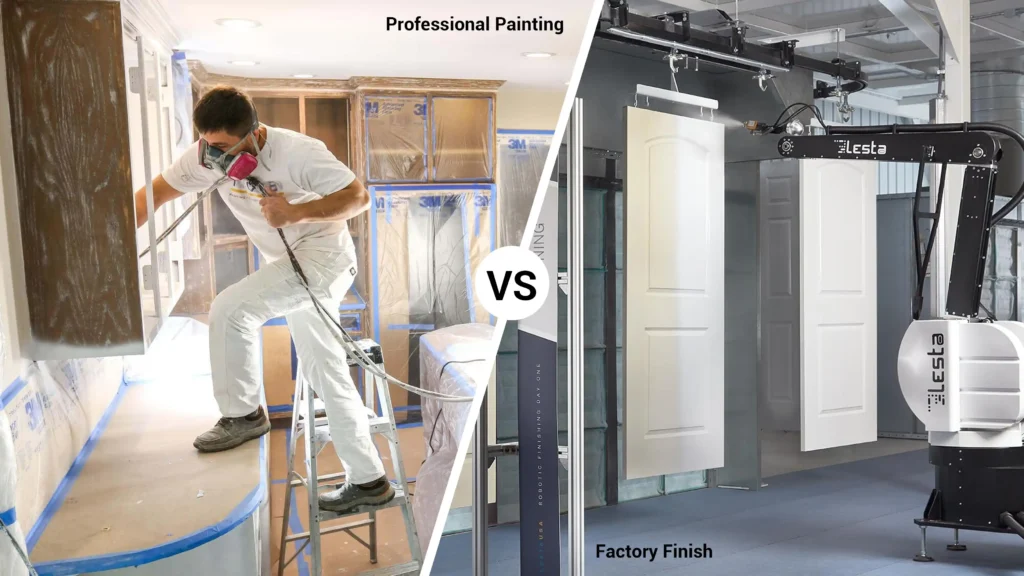
Professional painting can come close to a factory-finished look. True factory-finished cabinets are usually more stable because the material, edge sealing, coating, curing, and inspection happen as one controlled process.
DIY Painting
DIY painting is useful when the budget is tight and the cabinet structure is sound. It can make an old kitchen feel cleaner. I still see it as a refresh, not a factory replacement, because the room limits dust control and drying control.
Professional Site Painting
Professional site painting gives a better result than casual DIY work. The painter can mask, spray, and manage drying more carefully. Even so, the kitchen environment still has dust, hair, moisture, and movement from daily life.
Factory-Finished Custom Cabinets
Factory-finished custom cabinets start before paint. The door material, edge sealing, spray thickness, horizontal curing, color batch control, and pre-shipment quality check all matter. In my projects, I check color, edge quality, hardware holes, packaging, and visible damage before delivery.
A factory-finished look is not only about the front surface. I look at door edges, corners, handle areas, back sides, bottom edges, gloss level, touch, and cleaning performance. For overseas clients, I also prefer samples, 3D confirmation, and material checks before production, because screen colors can mislead.
Why Do Painted Kitchen Cabinets Peel, Chip, or Show Brush Marks?
Peeling paint feels like a paint problem, but the deeper cause is often hidden in cleaning, sanding, primer, coating thickness, or curing.
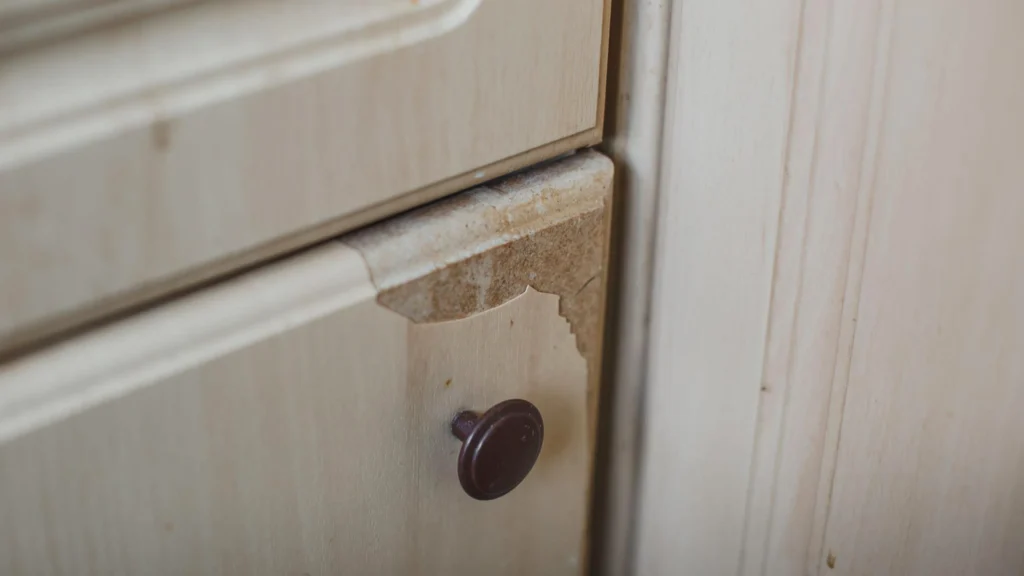
Painted cabinets peel, chip, or show brush marks when grease remains, glossy surfaces are not deglossed, wrong paint is used, primer fails, coats are too thick, or curing time is rushed.
Common Failure Reasons
I often see eight causes behind failed cabinet paint. Grease was not cleaned. Gloss was not sanded. Wall paint was used. Primer and paint did not match. Coats were thick. Curing was rushed. Handles wore the surface. Door joints moved.
Why Brush Marks Stay Visible
Brush marks come from brush quality, paint flow, coat thickness, drying speed, and working position. When a door is painted upright, paint can drag or sag. When it is laid flat, the coating has more time to level.
When Repair Is Possible
Small scratches can often be touched up. Large peeling areas usually need old paint removal and a new process. If the door itself is cracked or the material does not bond well, replacing the door may make more sense.
I do not judge a failed paint job by color alone. I ask where the failure starts. If it starts near handles, it may be wear. If it peels in sheets, it is adhesion. If Shaker joints crack again, the door structure may be moving under the finish.
Is It Better to Paint, Reface, or Replace Kitchen Cabinets?
A fresh coat of paint can save money, but it cannot fix a bad layout, swollen cabinet boxes, or outdated hardware.
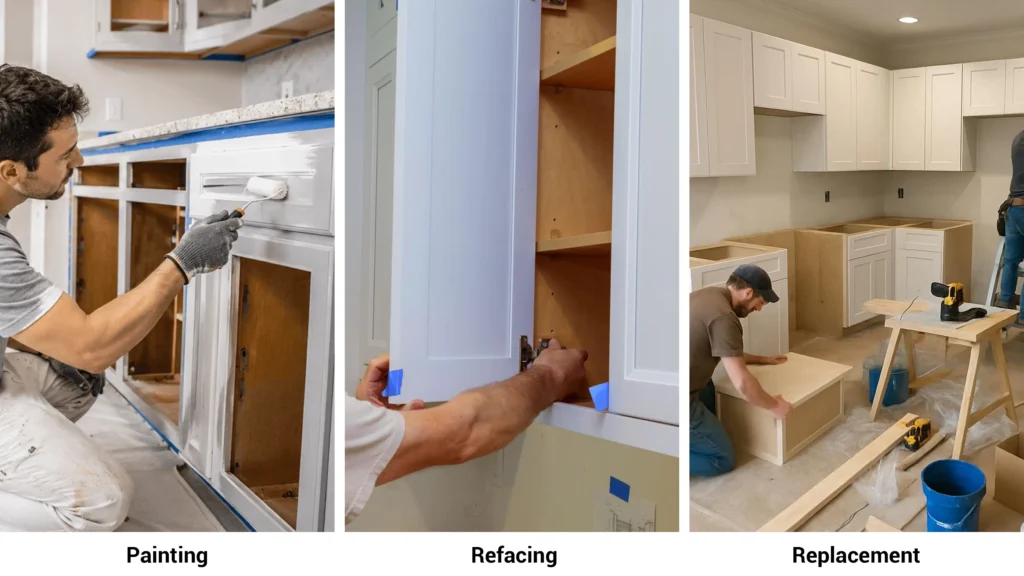
Painting works when the structure is good and only the color feels old. Refacing works when boxes are good but doors are wrong. Replacement works when layout, moisture damage, hardware, or finish expectations are bigger issues.
Paint
Paint is the best choice when the cabinet boxes are strong, the layout works, and the owner wants a color update for two to three years or more. It is also useful when the budget is limited and the kitchen use is moderate.
Reface
Refacing makes sense when the boxes are still solid but the door style, color, or surface is no longer right. New doors and panels can change the kitchen more deeply than paint, while keeping the existing cabinet structure.
Replace or Custom Build
Replacement is better when the layout does not work, the cabinet boxes are swollen, the hardware is old, or the owner wants hidden appliances, tall storage, an island, or a full villa-level upgrade. Paint cannot solve structure.
| Situation | Best Option |
|---|---|
| Good boxes, old color | Paint |
| Good boxes, poor doors | Reface |
| Bad layout or damaged boxes | Replace |
| High-end full renovation | Custom cabinets |
When a client is also replacing stone counters, flooring, wall panels, and appliances, I do not like putting too much money into weak cabinets. For boutique apartments or rentals, I also think about later repairs, color matching, and whether one damaged door can be replaced easily.
Project Snapshot: Luxury Villa Upgrade
- [Pain] Peeling DIY paint and weak structures delayed a full-house villa renovation.
- [Solution] Replaced with precision factory-finished custom cabinets, ensuring perfect edge sealing and color batch control.
- [Result] A flawless, durable kitchen delivered on schedule, perfectly matching the modern spatial design.
Conclusion
Paint can refresh solid cabinets, but factory-level results need controlled materials and process. At George Construction Group, I help clients choose smarter cabinet solutions from sample to installation.
Ready to Elevate Your Entire Space?
Whether you are designing a high-end villa, outfitting boutique apartments, or managing a resort project, true luxury requires consistency. At George Construction Group, we go far beyond kitchen cabinets.
We are your one-stop premium supplier for full-house renovations. From custom bathroom space design to perfectly coordinated furniture, doors, windows, and lighting, our factory-direct capabilities ensure your entire property achieves a flawless, cohesive finish without the hassle of managing multiple vendors.
- Custom Cabinetry
- Luxury Furniture
- Doors & Windows
- Sanitary Ware
- Premium Lighting
Leave your project details below, and our experts will customize a whole-house solution for you.