You ask about the cost of kitchen cabinets and hear a low number. The average cost of kitchen cabinets looks simple. Then the fit fails and the real bill grows.
The cost of kitchen cabinets runs about $150 to $500 per linear foot installed, or $4,500 to $15,000 for a full kitchen. But the real cost also covers box material, door finish, hardware, edge banding, moisture resistance, fit, and after-sales support. Price alone does not show real value.
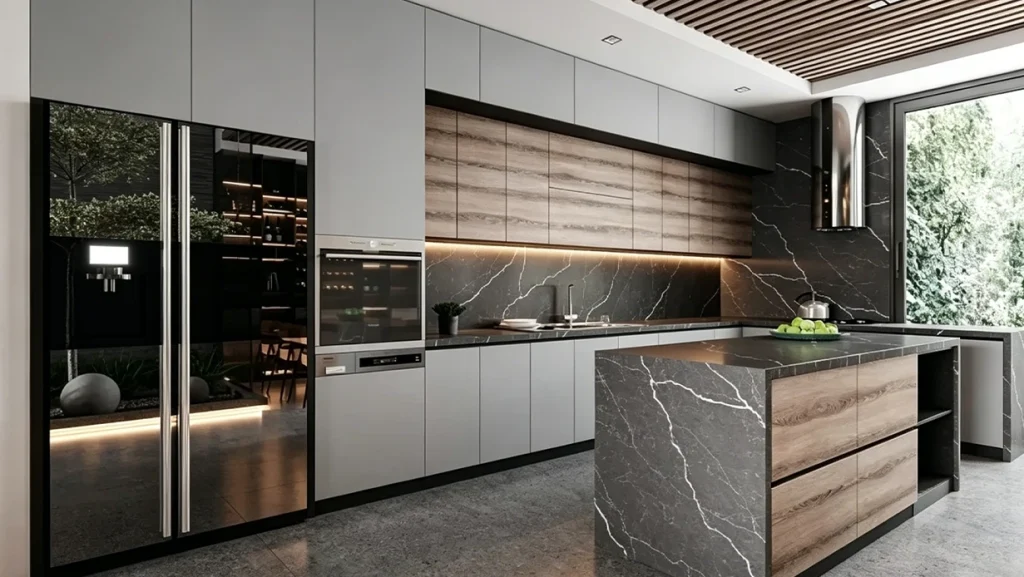
I have spent more than ten years in furniture and cabinet making, from the factory floor to over 1,000 finished projects. I have seen the same mistake many times. People chase the lowest quote and pay twice. Below I break the cost down piece by piece.
How Much Do Kitchen Cabinets Cost on Average?
You search for the average cost of kitchen cabinets and find ten different numbers. One site says $5,000. Another says $30,000. The wide gap feels confusing and a bit scary.
The average cost of kitchen cabinets runs about $150 to $500 per linear foot installed. Stock cabinets cost the least. Custom cabinets cost the most. A full kitchen often lands between $4,500 and $15,000, and high-end custom work can pass $30,000.
Source:
https://developmentpermits.mountainview.gov/residential/kitchen-remodel-for-single-family-and-duplex
I split cabinets into four tiers. Each tier fits a different budget and a different home.
Stock Cabinets
Stock cabinets cost about $100 to $400 per linear foot installed. They come in fixed sizes and few colors. They suit a tight budget or a simple layout. The cost of kitchen cabinets for a small kitchen often starts here.
Semi-Custom Cabinets
Semi-custom cabinets cost about $150 to $700 per linear foot installed. You get more sizes, colors, and door styles. They fit most middle and upper-middle homeowners. This tier balances price and choice well for a normal family kitchen.
Custom Cabinets
Custom cabinets cost about $500 to $1,200 per linear foot installed. A maker builds them for your exact space. They suit a villa, a self-built home, an odd-shaped room, or a buyer who wants one style across the whole house.
Fully Custom or Luxury Cabinets
Fully custom or luxury cabinets cost $500 to $1,500 or more per linear foot. The price can pass $30,000 for one kitchen. They suit high-end homes, designer projects, and small boutique projects that need a precise, premium look.
| Cabinet Tier | Cost Per Linear Foot (Installed) | Best Fit |
|---|---|---|
| Stock | $100–$400 | Budget, standard sizes, small kitchen |
| Semi-custom | $150–$700 | Most homeowners who want more choice |
| Custom | $500–$1,200 | Villas, odd layouts, one whole-house style |
| Fully custom / luxury | $500–$1,500+ | High-end homes, designer and boutique projects |
Per linear foot is only a rough guide. It cannot show your final quote. The estimated cost of kitchen cabinets changes a lot when a quote adds installation, countertops, or old cabinet removal.
Here is the point most price charts miss. The average cost of kitchen cabinets only sets your budget range. It does not tell you if one set is worth the money. Two kitchens can show the same number. One uses thin board and weak hinges. One uses moisture-safe board and soft-close slides. The cost of cabinets for a 10×12 kitchen can read the same in both quotes, yet only one lasts. Treat the average as a starting line, not the answer.
What Is Included in the Cost of Kitchen Cabinets and Installation?
You see one price for the cost of kitchen cabinets and installation. You think it covers the whole job. Later the invoice grows with extra lines you did not expect.
The cost of kitchen cabinets and installation usually covers the boxes, doors, drawers, hinges, slides, basic handles, and a standard finish. It often does not cover old cabinet removal, wall repair, labor, fillers, panels, crown molding, premium hardware, delivery, or tax. Always ask what the quote leaves out.
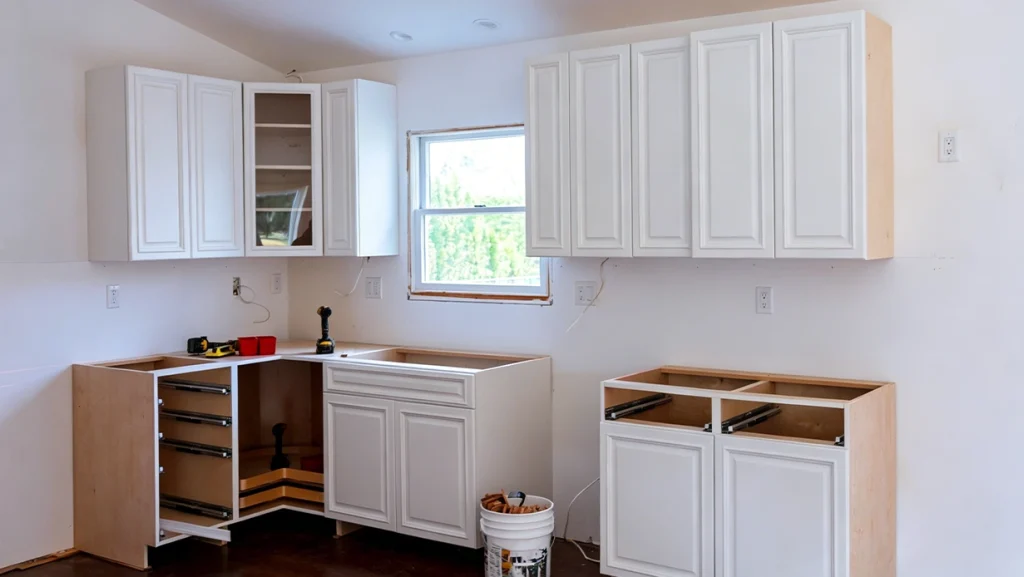
I always split a cabinet quote into two lists. One list is what you get. One list is what you may pay extra for.
What the Cabinet Price Usually Includes
The base price usually gives you cabinet boxes, doors, drawer fronts, drawers, hinges, slides, standard handles, and one standard finish. This is the core product. It is the part a factory can control and pack for export.
What Often Costs Extra
Many items sit outside the base price. These include old cabinet removal, wall repair, install labor, fillers, panels, toe kicks, crown molding, special colors, soft-close upgrades, pull-outs, pantry systems, delivery, storage, and damage handling. Permits also cost extra if you change wiring or plumbing.
One Question to Ask Every Supplier
Ask one clear question before you sign. “Does this quote include installation, removal, hardware, fillers, panels, delivery, and tax?” A clear answer protects your budget. A vague answer is a warning sign you should not skip.
| Usually Included | Often Costs Extra |
|---|---|
| Cabinet boxes, doors, drawer fronts | Old cabinet removal, wall repair |
| Drawers, hinges, slides | Install labor, fillers, panels, toe kicks |
| Standard handles, standard finish | Crown molding, special colors, soft-close |
| — | Pull-outs, pantry systems, delivery, tax, permits |
There is a part most quotes never explain: who owns each step. When you buy from a China factory, the factory price usually covers production, quality checks, packing, and loading the container. It does not cover your local work. Old cabinet removal, install, countertops, and plumbing still need a local team. I tell every client this early. It sets clear lines and stops the blame game later. Clear responsibility is part of the real cost, even with no price tag.
Is It Cheaper to Replace Kitchen Cabinets, Reface Them, or Just Replace the Doors?
Your cabinets look tired and dated. You want a cheaper fix than full replacement. But the wrong choice can hide a bad box and cost you more within a year.
Painting is the cheapest fix if the boxes are sound and the layout works. Refacing or new doors suit a stable box with dated or damaged fronts. Full replacement is best when boxes are swollen, moldy, or the layout is wrong. Cheapest now is not always cheapest later.
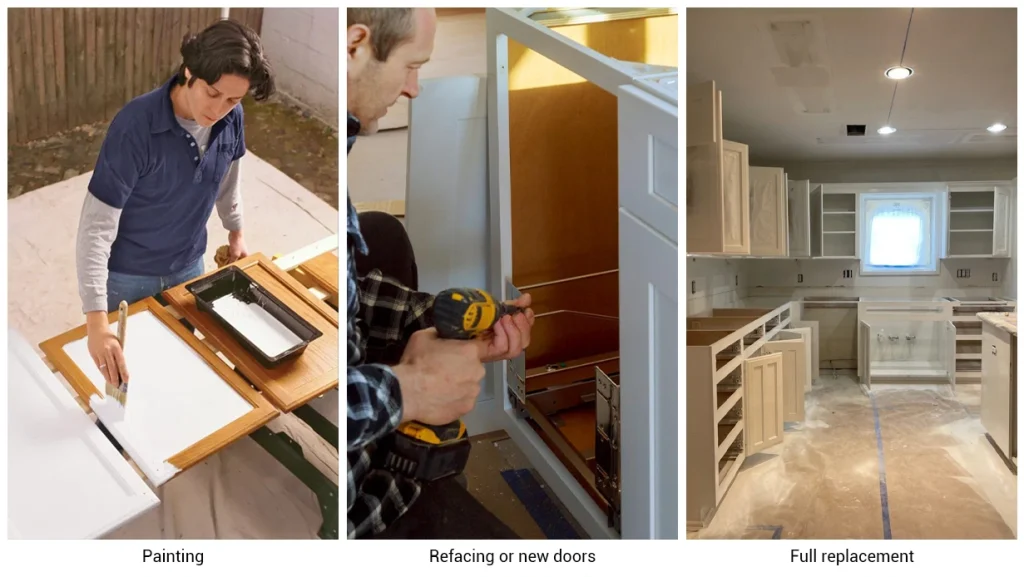
I look at three paths. Each one fits a different cabinet condition and a different goal.
When Painting or Refinishing Works
Paint works when the box is strong and you like the layout. The color is just dated. The budget is tight. Refinishing costs about $2,800 on average. It is the lightest, cheapest path for a sound kitchen.
When Refacing or New Doors Works
Refacing works when the box is stable but the doors look old or worn. You keep the size and storage. Refacing costs about $6,700 on average. You change the face, not the structure, so the layout stays the same.
When Full Replacement Is the Right Call
Full replacement is right when the box is swollen, warped, or moldy. The layout may be poor. The height may be wrong. The storage may be too small. A long-term home or a high-end kitchen often needs this path for one matched style.
| Option | Typical Cost | Best When |
|---|---|---|
| Repaint / refinish | ~$2,800 | Box is strong, you like the layout |
| Reface / new doors | ~$6,700 | Box is stable, fronts look dated |
| Full replacement | $4,500–$30,000+ | Box is damaged or layout is wrong |
Here I will not just say “new doors are cheapest.” That answer can hurt you. Think about a villa or a long-term home. If the box is weak, the sizes are off, and the hinges are low grade, refacing only wraps a fresh skin over old problems. You pay again when the box fails. For a home you keep, I weigh cost across ten years, not one weekend. Sometimes full replacement is the cheaper path in the end.
Are Custom Kitchen Cabinets Worth the Extra Cost?
Custom cabinets cost much more than stock. You wonder if the extra money is smart or wasted. A wrong call here can lock real cash into the wrong choice fast.
Custom cabinets are worth the extra cost when your space is odd, your storage needs are high, or you want one style across the whole home. They are often not worth it for rentals, quick flips, or simple standard kitchens on a tight budget. Need, not price, should decide.
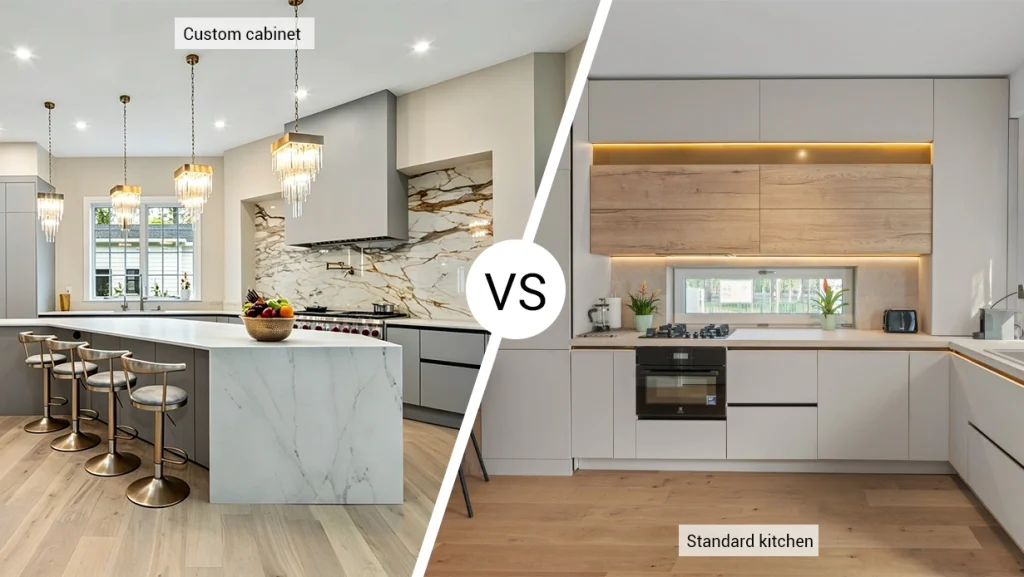
I ask one thing first. Does your space truly need custom work, or do you just want it?
When Custom Is Worth It
Custom is worth it for a villa, a self-built home, or an odd-shaped kitchen. It suits a small kitchen that must hold a lot. It fits full-height cabinets, special colors, and one matched style across kitchen, laundry, vanity, and wardrobe.
When You May Not Need Custom
You may not need custom for a rental or a short flip. A standard small kitchen often works fine with semi-custom. A very tight budget points the same way. A simple surface refresh does not call for custom either.
How to Judge the Trade-Off
Judge it by space, not by status. Custom shines when standard sizes leave dead gaps. Custom is not always pricier than a loaded semi-custom order. The real test is fit. Good fit turns the extra cost into daily value.
Custom is not “pay more, get more.” Many owners online make a sharp point. In a small galley kitchen, standard sizes leave dead space, so custom earns its price by using every inch. Some also note that custom is not always pricier than a loaded semi-custom order. So the smart question is not “is custom better?” It is “does my space waste room with standard sizes?” If yes, custom pays you back. If no, you may spend extra for little gain.
How Can You Reduce Kitchen Cabinet Costs Without Buying Cheap Cabinets?
You want to spend less on your cabinets. But cheap cabinets fail fast. The trick is to cut the right things and protect the parts that carry heavy daily use.
You can lower cabinet cost without cheap cabinets. Cut extras like glass doors, heavy crown molding, and special finishes. Use fewer small cabinets and wider boxes. Never cut the box, the moisture protection, the edge banding, the hinges, or the install quality. Save on looks, not on use.
I sort the cuts into two lists. One list is safe to trim. One list is not.
Where You Can Safely Cut
You can cut many add-ons with no real loss. Drop some glass doors. Skip heavy decorative end panels. Choose simple crown molding. Avoid special distressing or glazing. Use fewer tiny cabinets. Skip open display units you do not need.
Where You Should Never Cut
Keep the parts that take daily stress. Protect the box structure, the moisture-safe material, and the edge banding. Keep good hinges and slides. Keep solid everyday drawers. Keep a level install and a checked drawing before production. These parts decide the lifespan.
Here is a smart tip I share often. Many experienced owners online warn against one common “saving.” Do not swap drawers for doors just to cut cost. Drawers cost a little more, but they make daily use far easier, and you lose that comfort once it is built. A better way to save is to use fewer small cabinets and pick wider boxes. You keep the same storage, cut the part count, and protect the experience you live with.
What Hidden Costs Should Homeowners Watch for Before Ordering Cabinets?
Your quote looks complete on paper. Then hidden costs appear and the project stalls. A wrong size, an unclear job, or a missing line can break your budget and timeline.
The main hidden costs come from measurement mistakes, wrong cabinet sizes, missing fillers or panels, appliance clearance issues, countertop delays, contractor return trips, delivery damage, storage fees, and unclear install responsibility. Color can also shift on later add-on cabinets. Most hidden costs trace back to bad measuring or unclear ownership.
I watch three risks more than any other. Each one can stop a whole project.
Wrong Size: The Cabinet Will Not Fit
A wrong measurement is the worst hidden cost. The cabinet arrives and will not fit the wall or the appliances. The countertop measure gets canceled. The install waits weeks. One small error can delay the whole kitchen.
Unclear Responsibility: The Blame Game
Unclear ownership costs real money. The factory, the designer, the installer, and the contractor each point at the others. No one fixes the gap. The project sits idle while you pay for delays and return trips.
Incomplete Quote: The Surprise Bill
An incomplete quote hides costs in plain sight. You think the price covers install, hardware, and fillers. It does not. The extra lines arrive after you commit, when it is too late to compare other suppliers.
This is where I have watched projects fall apart. A wrong-size cabinet cancels the countertop template. The counter install slips by weeks. The contractor returns again and again, and each trip adds cost. I built our process to stop this. We review your drawings, confirm sizes before production, run quality checks, photograph the packed container, and send install support files. None of this shows on a price tag. All of it lowers the real cost of your project.
How Should You Estimate the Cost of Kitchen Cabinets Before Asking for a Quote?
You ask for quotes and get numbers you cannot compare. The padding hides inside vague specs. Without clear data first, every quote stays a rough guess and a moving target.
To estimate the cost of kitchen cabinets, gather your layout, exact measurements, appliance sizes, cabinet scope, material choice, finish, hardware level, and delivery location. Note if you want countertops in the same quote. Clear data gives you a fair, line-by-line price you can compare with other suppliers.

I give every client a short checklist before they ask for a price. It makes the quote faster and cleaner.
Map Your Layout and Measurements
Start with your kitchen shape: L-shape, U-shape, galley, or island. Then record wall length, ceiling height, and window and door spots. Add appliance sizes for the fridge, oven, dishwasher, and range hood. These numbers anchor the whole quote.
List Your Scope, Material, and Finish
List every cabinet you need: base, wall, tall pantry, island, vanity, and laundry. Pick a material like MDF, plywood, solid wood, veneer, PET, or lacquer. Choose a finish and a hardware level. Note if you want the cost of kitchen cabinets and countertops in one quote.
Add Project Type and Delivery Details
Name your project type: single home, villa, small apartment, or boutique hotel. Give your country, city, and port. Say if you need a local install or supplier guidance. These details decide packing, freight, and support.
Send your drawings first. If your project covers more rooms, add the room list or BOQ. Then I can check what we supply together and keep the quote clear.
Here is why the checklist matters. Many owners online complain they cannot get a line-by-line breakdown, so quotes hide padding and feel impossible to compare. I flip that around. The clearer your data, the less a supplier can pad the price. Clear specs turn vague guesses into an apples-to-apples compare. They also speed up the average cost of kitchen cabinets and countertops in your real quote, because no one chases missing details.
Project Snapshot: Luxury Apartment Fit-Out
Pain Point: A developer faced severe budget overruns using standard fixed-size vanities that left dead space and required excessive fillers in premium apartment layouts.
Solution: We engineered fully customized cabinets based entirely on specific spatial requirements, ensuring a flawless edge-to-edge fit across 120 units without the luxury markup.
Result: Zero installation delays, maximized spatial efficiency, and a seamless aesthetic that elevated the property value.
Conclusion
The real cost of kitchen cabinets is value, not just price. Judge fit, materials, and risk. Send your drawings to George Construction Group, and I will help.
Ready to Bring Your Whole Project to Life?
The real cost of a villa or apartment fit-out isn’t just materials; it’s the time spent managing them. Beyond premium kitchen cabinets, George Construction Group is your ultimate one-stop supplier for custom furniture, doors, windows, sanitary ware, lighting, and complete bathroom spatial design.
Stop chasing dozens of suppliers. Send us your floor plans, BOQ, or design ideas below, and let our dedicated project team provide a comprehensive, line-by-line quote for your entire property.