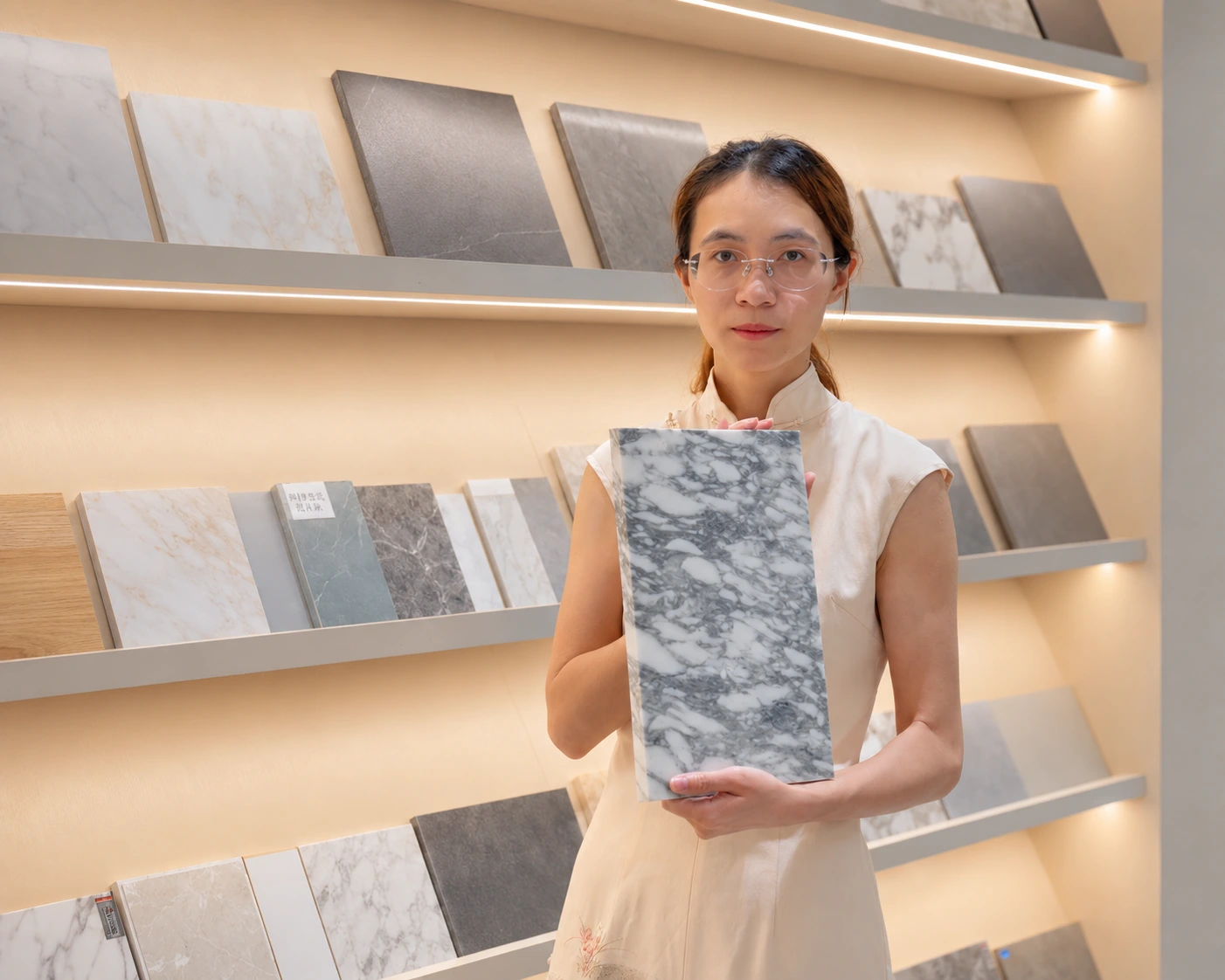
Choosing the wrong kitchen cabinet styles is a costly mistake many homeowners only notice after installation. The wrong door profile, color, or finish can make a beautiful kitchen feel dated within a few years.
A timeless kitchen cabinet style combines a simple door profile, a neutral color temperature, a durable surface material, and hardware that does not follow short trends. Shaker, slab, inset, and natural wood cabinets can all stay beautiful for years when proportion, finish, and installation quality are well controlled.
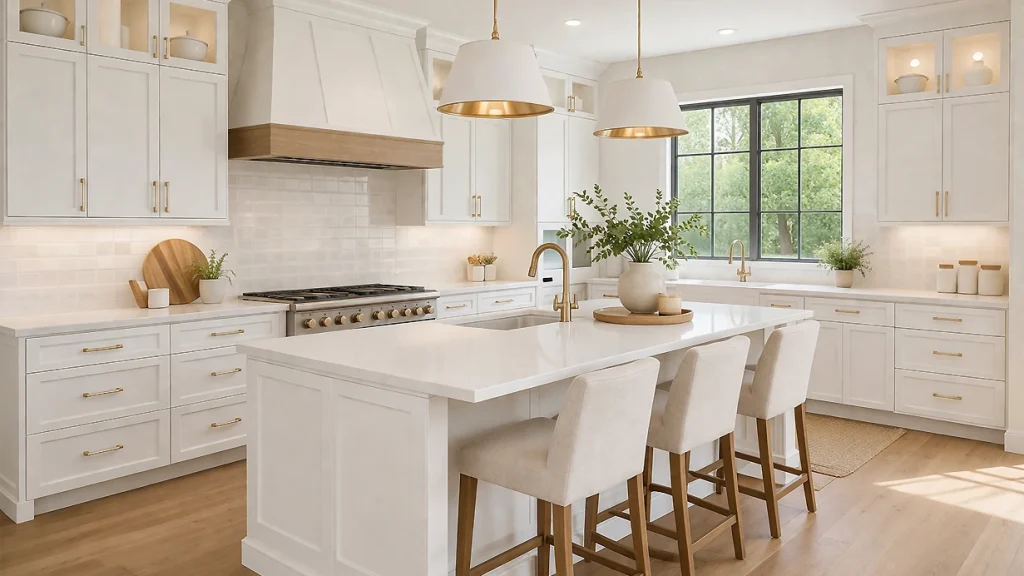
I have worked with homeowners across many different projects, and the question I hear most often is: “Will this cabinet style still look good in ten years?” That question deserves a real answer, not just a mood board.
What Makes a Kitchen Cabinet Style Timeless?
Many homeowners assume timeless means boring, or that only white Shaker cabinets are safe. That is not true. The real question is whether the style can adapt to future changes in countertops, wall colors, and hardware.
A cabinet style is timeless when it works with different countertops, wall colors, and hardware without looking out of place. Door profile simplicity, warm color temperature, quality material, and restrained hardware are the four factors that matter most in this judgment.
The key dimensions to evaluate are:
Door Profile
Shaker, slab, and inset profiles stay clean over time. Raised panel doors with very deep grooves can feel heavy or traditional in the wrong room. A simpler profile gives you more flexibility later.
Color Temperature
Warm white, cream, and off-white are safer than cold, bright white. Natural wood tones like white oak or walnut age well. Strong red-orange wood tones or heavily distressed finishes can look dated faster than most people expect.
Surface Material
Wood veneer, painted MDF, and plywood cabinet boxes all affect both appearance and durability. PET, lacquer, and melamine finishes behave very differently over years of daily use. Material choice is not just about looks — it is about how the surface holds up.
Hardware
All-black or all-gold hardware follows short trends. Simple brushed nickel, matte black with warm undertones, or unlacquered brass works across more styles and longer time frames.
Architecture Fit
A modern apartment, an older home renovation, and a custom villa all need different cabinet profiles. A cabinet that looks perfect in a showroom may feel heavy, cold, or busy in the wrong room.
If the cabinet can work with a different countertop, wall color, and hardware in the future, it is usually more timeless. I always tell clients: do not choose a style based on one photo. Choose it based on how flexible it is.
Which Kitchen Cabinet Styles Should Homeowners Know First?
Most homeowners searching for different kitchen cabinet styles start by looking at photos. But photos do not tell you how a style cleans, how it custom-builds, or how risky it is over time.
The most important kitchen cabinet styles to know are Shaker, slab, raised panel, inset, glass-front, beadboard, handleless, and natural wood. Each has a different timeless level, cleaning difficulty, and set of custom production requirements that affect the final result.
Here is a simple comparison across the styles I recommend most often:
| Style | Best For | Timeless Level | Cleaning | Custom Note |
|---|---|---|---|---|
| Shaker | Transitional, classic homes | High | Medium | Rail width and panel depth affect final look |
| Slab | Modern apartments, minimalist kitchens | High if material is right | Easy | Finish flatness and edge quality matter most |
| Raised Panel | Traditional, luxury villas | Medium–High | Harder | Works better in larger kitchens with high ceilings |
| Inset | High-end custom kitchens | High | Medium | Needs precise measurement and installation |
| Glass-Front | Accent cabinets, display zones | Medium | Medium | Better as accent, not full kitchen |
| Beadboard / Fluted | Cottage, warm kitchens | Medium | Harder | Grooves need good finish and regular cleaning |
| Handleless | Modern kitchens | Medium–High | Easy | Hardware engineering must be reliable |
| Natural Wood | Warm modern, villas | High if tone is controlled | Medium | Veneer matching and stain control matter |
Most articles only describe what each style looks like. What matters more is how each style holds up in daily life and how much production care it requires. Cleaning difficulty and custom notes are where many homeowners get surprised after delivery.
Which Kitchen Cabinet Style Fits Your Home Best?
Matching a cabinet style to your home is not about picking the most popular option. It is about understanding how the style interacts with your room’s light, ceiling height, flooring, countertop, and wall color.
The best kitchen cabinet style for your home depends on your room’s architecture, natural light, and how the space will be used daily. Matching style to context — not to trends — is what separates a kitchen that looks designed from one that just looks decorated.
Source:
https://wp.nyu.edu/mind/2024/04/16/creating-the-perfect-kitchen-for-home-chefs/
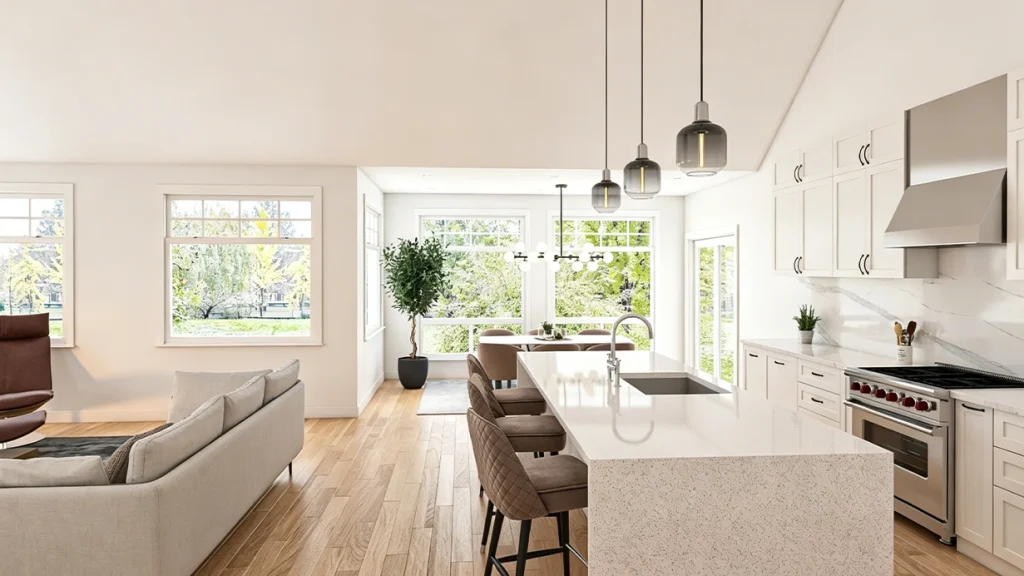
Here are the real-life scenarios I use when advising clients:
Modern Apartment or Small Kitchen
Slab doors, handleless cabinets, light wood tones, and warm white work best here. Clean lines and easy-clean surfaces matter more in compact spaces. Avoid profiles with deep grooves or heavy visual weight.
Luxury Villa or Custom Home
Inset cabinets, slim Shaker profiles, natural wood veneer, and stone island pairings create the best result. Proportion and material quality are the priority. Every detail — from drawer systems to edge banding — will be noticed.
Older Home Renovation
Shaker doors, recessed panel profiles, warm painted finishes, and wood accents bridge old and new architecture well. The goal is to update the space without making it feel mismatched.
Boutique Apartment or Hotel Project
Slab doors or Shaker with slab drawers work well here. Durable finishes and batch consistency across multiple units matter most. Easy cleaning and reliable hardware reduce long-term maintenance.
Heavy Cooking Kitchen
Slab profiles with PET, HPL, or easy-clean lacquer finishes are the practical choice. Avoid profiles with too many grooves. Dark colors will show oil stains and fingerprints more than light or mid-tone finishes.
A cabinet style that looks perfect in a showroom may feel heavy, cold, or busy in the wrong room. I always recommend looking at the cabinet style together with your flooring sample, wall color swatch, and countertop edge before making a final decision.
Which Kitchen Cabinet Styles Are Easiest to Clean?
Cleaning difficulty is one of the most practical questions homeowners ask, and most design articles skip it entirely. In a real kitchen with daily cooking, oil, steam, and fingerprints, the surface and profile type matter as much as the door style.
Slab and handleless cabinets are the easiest kitchen cabinet styles to clean. Flat surfaces with no grooves or frame joints wipe down in seconds. Shaker, raised panel, beadboard, and fluted profiles have more surface detail, which traps grease and dust in heavy-use kitchens.
Here is a cleaning difficulty comparison by style:
| Style | Cleaning Difficulty | Key Risk |
|---|---|---|
| Slab | Easy | Surface scratches and fingerprints if finish is low quality |
| Handleless | Easy | Push-to-open mechanism needs reliable engineering |
| Shaker | Medium | Inner frame joints collect grease over time |
| Slim Shaker | Medium | Narrow rail proportions and paint quality must be controlled |
| Inset | Medium | Gap between door and frame can collect debris |
| Raised Panel | Harder | Deep grooves trap oil and dust |
| Beadboard / Fluted | Harder | Vertical grooves require more effort in cooking areas |
Dark finishes, high-gloss surfaces, and strong colors show fingerprints, dust, and oil more clearly than warm mid-tone or matte finishes. This does not mean you should avoid them — it means you should plan for it.
Cleaning difficulty is not decided only by the door profile. Surface material, edge banding quality, hardware position, and handle type all affect how easy the cabinet is to maintain. A poorly finished Shaker door will be harder to clean than a well-finished one, even if the profile is the same.
Engineering & Precision Matter
Exceptional edge-banding and seamless hardware integration define a project’s lifespan. We prioritize exact spatial customization over fixed standard sizes to ensure flawless execution.
Custom B2B SolutionsAre White and Wood Kitchen Cabinet Styles Still Timeless?
White kitchen cabinet styles and wood kitchen cabinet styles are the two most searched categories online, and the most debated. The real answer is more specific than most people expect.
White and wood kitchen cabinet styles are still timeless — but only in the right tone, material, and combination. Cold bright white and heavy red-toned wood date faster than warm white, cream, white oak, or walnut paired with neutral countertops and restrained hardware.
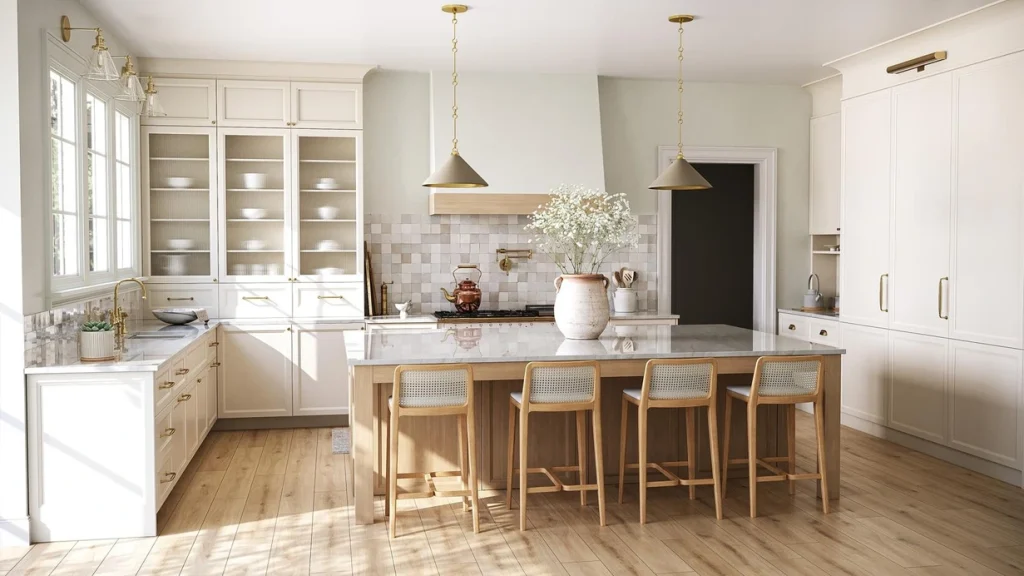
White Kitchen Cabinets
Pure cold white can feel sterile, especially under warm lighting. Warm white, cream, and off-white are softer and more adaptable. White Shaker cabinets remain one of the safest choices, but the countertop, wall color, and hardware must add warmth to keep the result from feeling flat.
Wood Kitchen Cabinets
White oak, walnut, and natural veneer tones are the safest choices in the wood kitchen cabinet styles category. Red-orange tones, heavily distressed finishes, and overly golden stains age faster. Wood color is not about using more wood — it is about controlling the balance between the floor, cabinet, island, and wall surfaces.
Dark and Colored Cabinets
Deep green, navy, charcoal, and warm black can feel very high-end. I recommend using these as island colors, base cabinets, or accent zones rather than covering all surfaces. Full dark kitchens can feel heavy and reduce natural light.
Color must always be confirmed in real light with a physical sample — not from a screen photo. Kitchen cabinet styles and colors that look elegant online often shift significantly under different artificial lighting conditions. I always send physical color samples before production is confirmed.
Which Cabinet Styles Work Best for Villas, Custom Homes, and Boutique Projects?
High-end homes, villas, and small boutique projects have different priorities than standard renovations. The cabinet style must match the architecture, hold up under close inspection, and stay consistent across the full project.
For villas and custom homes, inset and slim Shaker profiles with natural wood veneer and stone pairings deliver the strongest result. For boutique apartments and hotel projects, slab and flat-panel doors with durable, easy-clean finishes offer better batch consistency and lower maintenance.
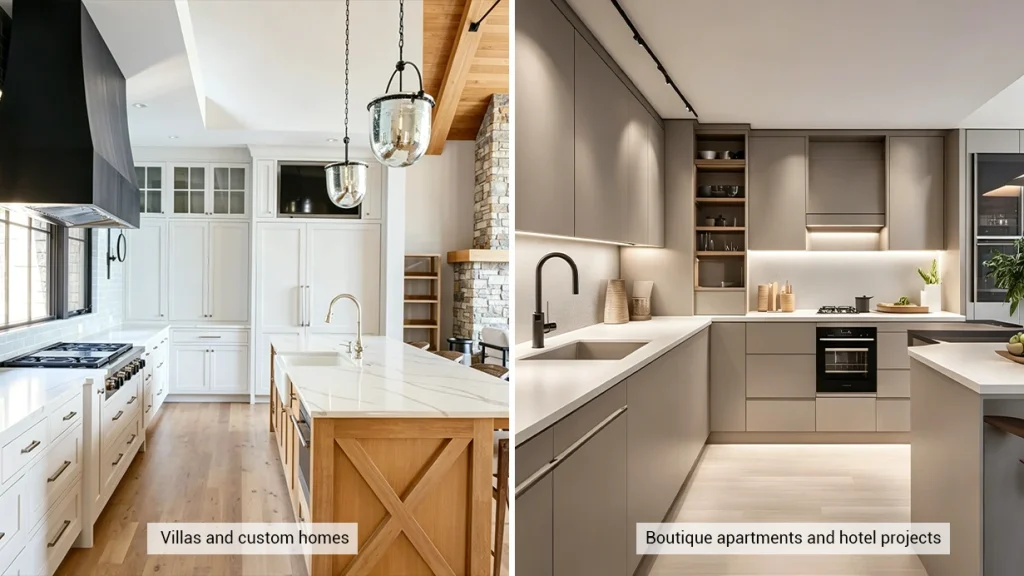
Villa and Custom Home
Inset cabinets, slim Shaker profiles, natural wood veneer doors, stone island tops, and tall pantry columns work well at this level. The priority is proportion, material quality, and a consistent finish across every room. Hardware detail and drawer system quality are visible in this context.
Case Snapshot: Private Villa, Singapore
High-End Renovation
Warm white Shaker uppers, wood-tone base cabinets, slab drawer fronts, and updated brushed hardware combine old and new architecture well. The focus is on a result that does not date quickly and adds real value to the property.
Boutique Apartment, Hotel, or Homestay Project
Slab doors or Shaker with slab drawer combinations work well in batch projects. Durable finishes, consistent color matching across units, clear room labeling, and reliable packing are the production priorities here. Easy-clean surfaces reduce long-term operating cost.
I have worked on projects where the design looked strong on paper but fell apart in the details — uneven door gaps, inconsistent stain color, cheap drawer slides. At this level of project, the real difference is in the production process, not just the style selection.
How Should You Confirm a Cabinet Style Before Ordering from China?
Ordering custom cabinets overseas involves real risk if the confirmation process is not structured properly. Every detail that is not confirmed in writing before production is a potential problem on delivery.
Before ordering cabinets from China, confirm drawings, door style, cabinet box material, surface finish, hardware, color samples, and QC inspection details in writing. The goal is not to make the process complicated — it is to make every important detail visible before production begins.
Here is the checklist I use with every overseas client:
Layout and Dimensions
Send room dimensions, floor plan drawings, ceiling heights, window and door positions, and appliance sizes. Confirm base, wall, tall, island, pantry, laundry, and vanity cabinet positions before production starts.
Door Style and Profile
Confirm the door style in writing: Shaker, slab, inset, raised panel, glass-front, or combination. Specify rail width, panel depth, and any special profile details.
Material and Construction
Confirm the cabinet box material (plywood or MDF), door panel material, surface finish type (lacquer, PET, melamine, veneer), and edge banding specification.
Color and Finish Sample
Confirm color using RAL or Pantone reference plus a physical sample. Screen colors are not reliable. Request a painted or finished sample panel before full production.
Hardware
Confirm hinge brand and model, drawer slide system, handle or knob style, lift-up or push-to-open mechanisms, and any special fitting requirements.
Countertop and Appliance Coordination
Confirm countertop edge profile, backsplash tile relationship, and appliance cutout dimensions. These details affect the cabinet layout and must be resolved before cutting begins.
Shop Drawings and 3D Rendering
Request detailed shop drawings and, if needed, a 3D rendering for review. This is the last checkpoint before production where changes are still low-cost.
QC Photos and Videos Before Shipment
Request quality inspection photos and videos covering door flatness, gap consistency, hardware installation, surface finish, and packaging. This step protects you from receiving damaged or incorrect product.
Packing and Installation Sequence
Confirm export packaging standards, room-by-room labeling, and installation sequence documentation. Proper labeling saves significant time on-site during installation.
The goal is not to make overseas sourcing complicated. It is to make every important detail visible before production. A clear confirmation process protects both sides and produces better results.
Conclusion
A timeless kitchen cabinet style is built on proportion, material quality, color tone, and production accuracy — not door design alone. Contact George Construction Group to get factory-direct guidance on your next cabinet project.
Ready to Build Your Dream Space Without the Sourcing Headache?
Coordinating cross-border shipments for kitchen cabinets, aluminum windows, sanitary ware, and custom furniture is exhausting and risky. Let us consolidate your supply chain. George Construction Group specializes in whole-house customization for villas and luxury apartments. Fill out the form below with your floor plans or project requirements, and our engineering team will provide a comprehensive, one-stop material proposal within 48 hours.