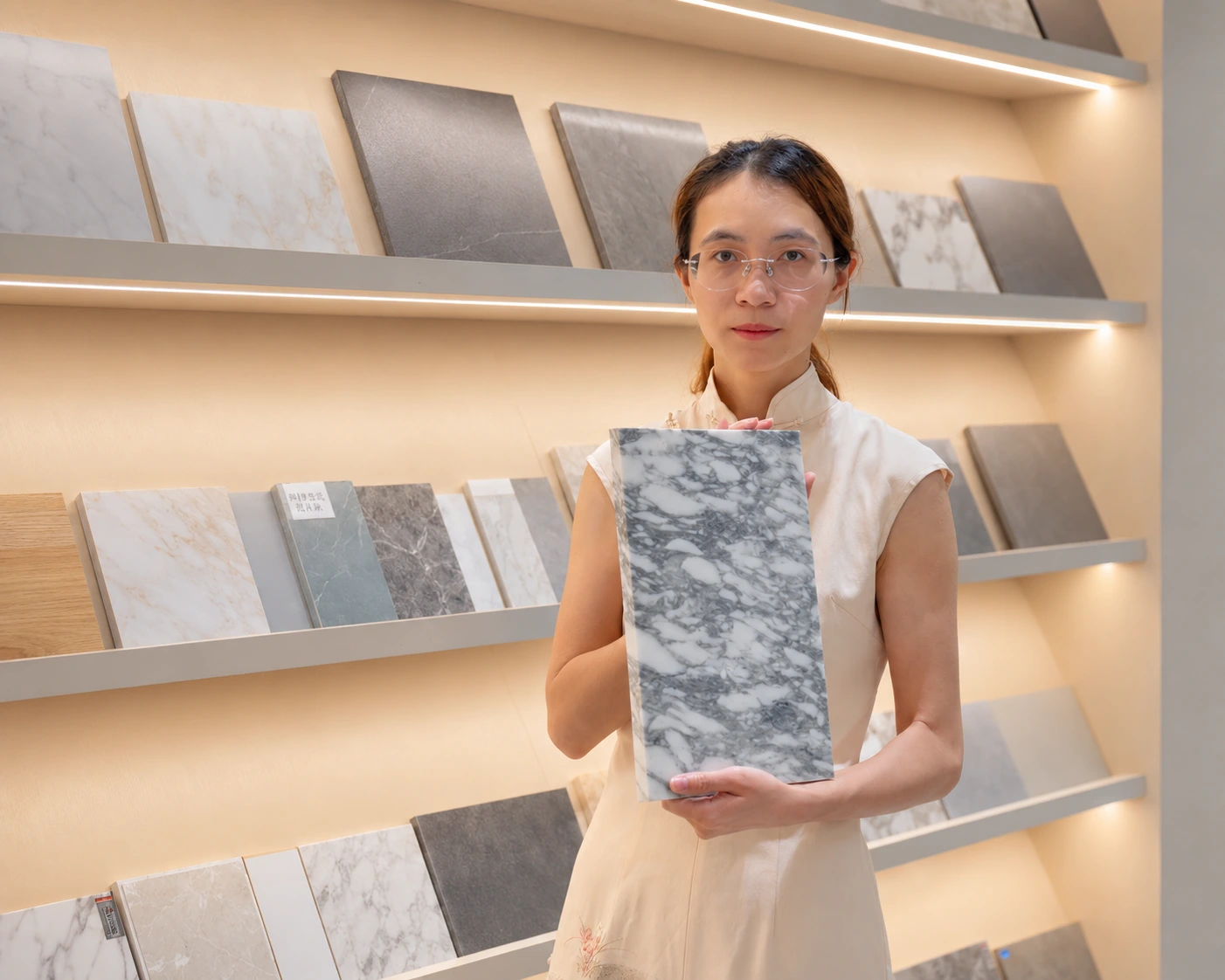
Cabinet Materials can make a beautiful kitchen fail fast. I often see high-end kitchen cabinet materials chosen by appearance, while the best kitchen cabinet materials are decided inside, not outside.
The best cabinet material for a high-end kitchen is usually a smart mix of plywood, MDF, veneer, solid wood, strong drawer materials, good back panels, sealed edges, and reliable hardware. Each part should use the material that fits its job.
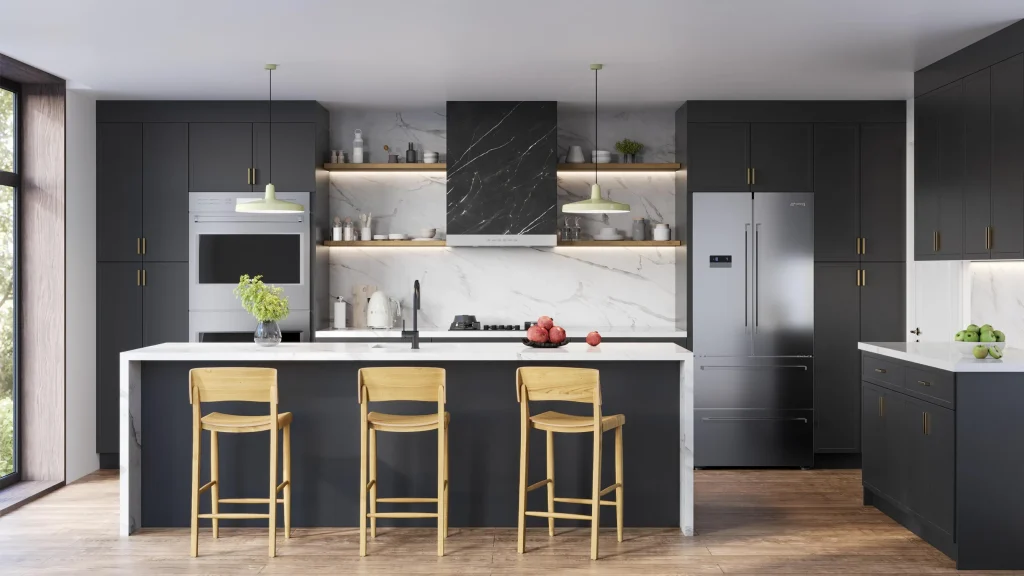
A luxury kitchen is not only about color, door style, or a glossy finish. I look at the box, door, back panel, drawer system, edge banding, hardware, and sink area together because these hidden details decide long-term use.
What Are Kitchen Cabinets Actually Made Of?
Many people think kitchen cabinets are made from one board material. This is a problem because a cabinet is a system, and one weak hidden part can affect the whole kitchen.
Kitchen cabinets are made of cabinet boxes, doors, drawer boxes, back panels, finish layers, and hardware. The common types of kitchen cabinet materials include plywood, MDF, particle board, solid wood, veneer, laminate, melamine, lacquer, and thermofoil.
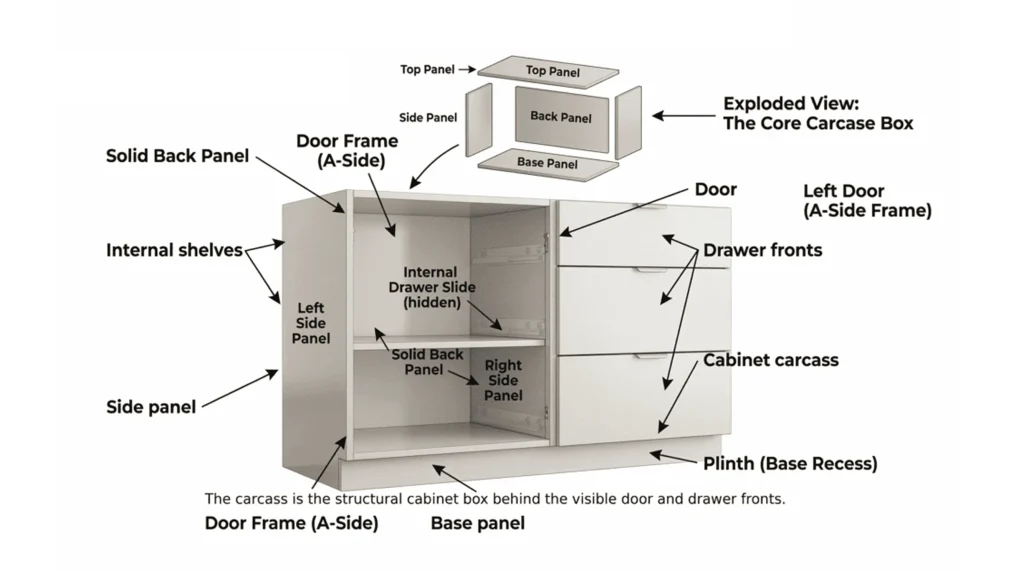
Cabinet Box or Carcass
The cabinet box, also called the carcass, includes side panels, bottom panels, top panels, shelves, and partitions. I always check the box first because it carries the weight of the countertop, dishes, hardware, and daily use.
Cabinet Doors
Cabinet doors decide the first impression of the kitchen. They also affect touch, style, and maintenance. A painted door, a wood-look door, and a modern slab door may all need different cabinet door materials.
Drawer Boxes and Back Panels
Drawer boxes affect load capacity, smooth movement, and long-term stability. Back panels are also very important. I have seen low-cost cabinets use very thin backs, and homeowners only notice this problem after delivery.
Finish Layer and Hardware
The finish layer can be paint, veneer, laminate, melamine, thermofoil, or lacquer. Hardware is not a board material, but hinges, slides, and handles decide how the cabinet feels when someone opens it every day.
When I review a cabinet quotation, I do not only ask whether it is MDF, plywood, or particle board. I ask where each material is used. A strong box with a weak drawer, thin back panel, and poor edge sealing is not a high-end cabinet system.
Which Cabinet Material Is Best: Plywood, MDF, Particle Board, or Solid Wood?
This question is common because many buyers want one simple answer. The real answer is more practical. Plywood, MDF, particle board, solid wood, and veneer can all be useful when used correctly.
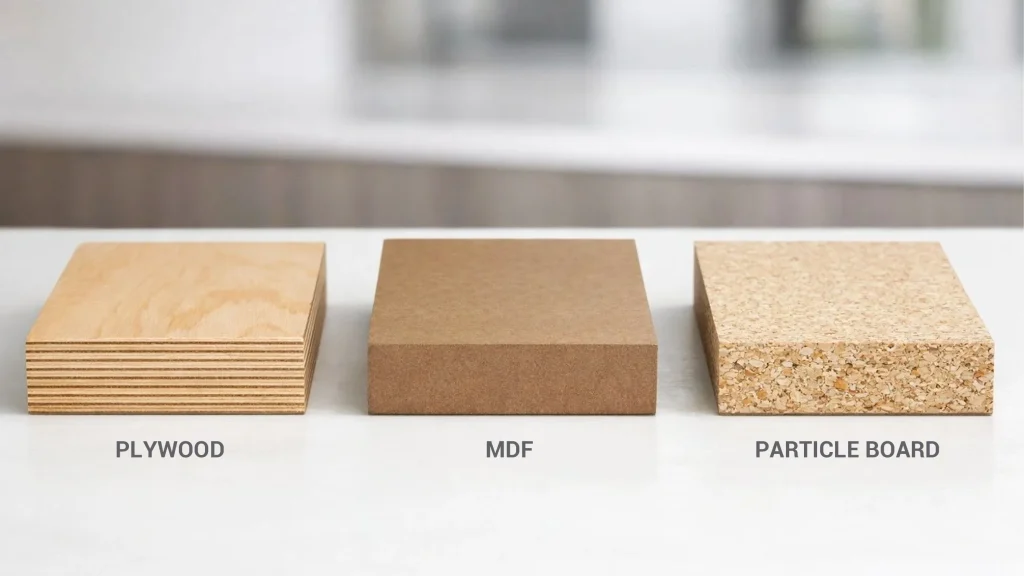
Plywood is strong for cabinet boxes and wet areas. MDF is good for smooth painted doors. Particle board can control cost. Solid wood gives a premium feel. Veneer gives a refined wood look when the base and finish are well made.
Plywood
Plywood is often a strong choice for cabinet boxes, load-bearing structures, and sink cabinets. It usually has better screw holding strength than low-density particle board, and it can perform better in areas that need more structure.
MDF
MDF is not always low-end. I often recommend good MDF for painted cabinet doors because the surface is smooth and stable. It can help reduce visible grain movement and joint lines in painted door designs.
Particle Board
Particle board is often used in modular cabinet materials and budget cabinet systems. It can work if the density, surface, and edge banding are good. It becomes risky when the board is low-density or poorly sealed.
Solid Wood and Veneer
Solid wood has a natural feeling and strong visual value, but it can move with humidity. Veneer is often used in high-end kitchens because it gives a real wood look without making every part solid wood.
| Material | Best Use | Main Risk |
|---|---|---|
| Plywood | Boxes, sink cabinets, structure | Higher cost |
| MDF | Painted doors, smooth finishes | Needs sealed edges |
| Particle board | Budget boxes, standard interiors | Water damage if poorly sealed |
| Solid wood | Frames, premium details | Humidity movement |
| Veneer | High-end wood look | Depends on base and finishing |
The biggest mistake I see is treating one material as always good or always bad. MDF is not automatically cheap, and solid wood is not automatically the best choice. A high-end kitchen needs the right material in the right place.
Which Cabinet Materials Should You Use for Boxes, Doors, Backs, and Drawers?
A better buying method is to choose cabinet materials by cabinet part. This helps you read a quotation clearly and find where quality has been improved or quietly reduced.
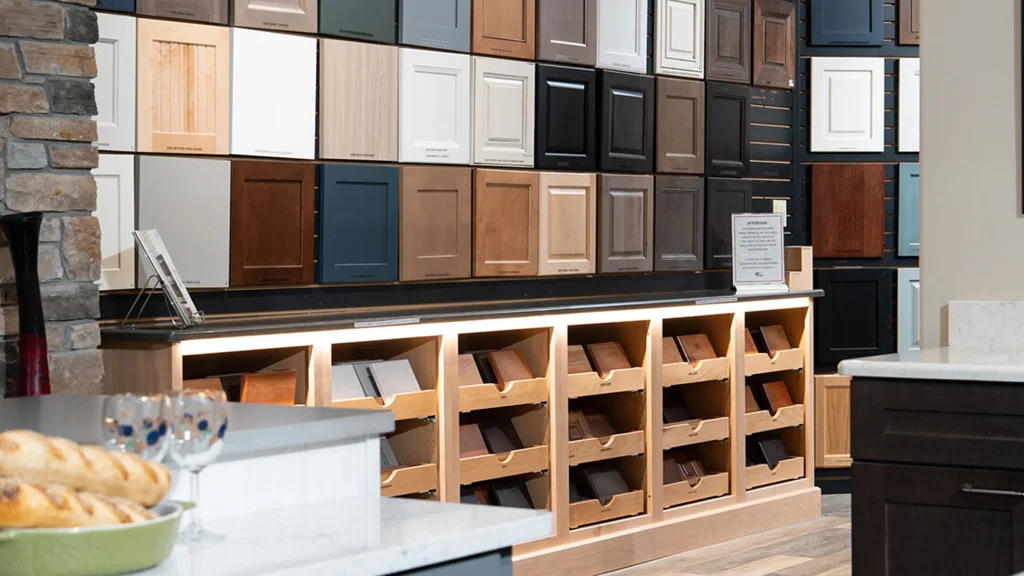
For cabinet boxes, consider plywood, high-quality melamine board, or moisture-resistant board. For doors, use MDF for paint, veneer or solid wood frames for wood looks, and stable cores for modern slab doors.
Cabinet Box
For the cabinet box, I usually look for plywood, high-quality melamine board, or moisture-resistant board. The final choice depends on budget, project location, humidity, and the expected life of the kitchen.
Cabinet Door
For painted styles, MDF can be a good option because it gives a smooth surface. For stained wood looks, I prefer solid wood frames with veneer panels, plywood-core veneer, or other premium structured options.
Back Panel
A back panel should not be judged only by whether it exists. I check thickness, fixing method, and whether it helps the cabinet stay square during transport, installation, and long-term use.
Drawer Box and Interior Finish
For drawer boxes, I check plywood, solid wood, or metal drawer systems. I also check slide load capacity. For interiors, melamine and laminate are practical because they are easy to clean when the base and edges are good.
Toe Kick and Sink Cabinet
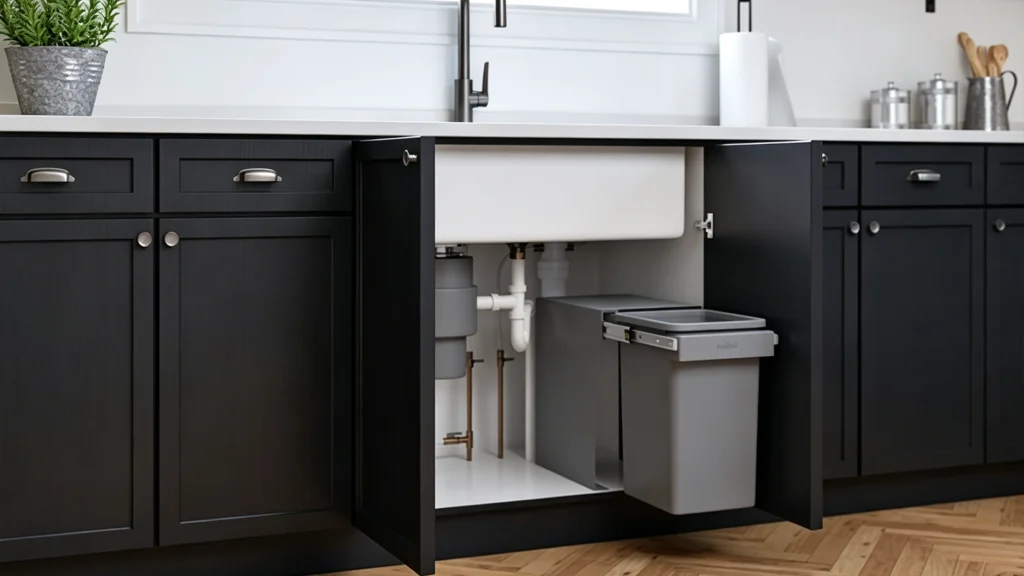
The toe kick and sink cabinet need extra attention because they face water, mopping, leakage, and daily impact. I prefer better sealing, moisture-resistant options, and clear protection details in these areas.
I like to use a factory specification checklist for this step. It forces the supplier to show the box material, door material, back thickness, drawer structure, edge banding, hardware, finish sample, and moisture protection before production starts.
What Cabinet Material Is Most Durable in a Wet or High-Use Kitchen?
Many buyers ask for waterproof wood cabinet material, but I always explain the same thing. There is no real waterproof wood cabinet system without good sealing, correct installation, and smart detail control.
The most durable cabinet system for wet or high-use kitchens usually uses sealed plywood, MR MDF, HDHMR, high-pressure laminate, good melamine surfaces, PVC or ABS edge banding, and protected sink cabinet details.
Source:
https://facilities.umd.edu/info-resources/call-general-contractor-specs/division-12-furnishings
Common Wet Kitchen Risks
The biggest risks are sink leakage, steam, wet floor cleaning, dishwasher heat, and humid air. In coastal or tropical locations, even good materials can fail if the cut edges and holes are not sealed well.
Better Material Choices
Sealed plywood can work well for cabinet boxes and sink areas. MR MDF and HDHMR can help in selected parts. High-pressure laminate, quality melamine, and good edge banding can improve daily cleaning and surface protection.
Materials I Avoid Near Water
I avoid low-density particle board, unsealed MDF, very thin back panels, and normal boards placed too close to water. These materials may look acceptable in photos, but they can swell or weaken in real kitchens.
If Particle Board Is Already Chosen
If particle board is already chosen, I focus on edge banding, waterproof mats, proper elevation from the floor, careful sink installation, and fast leak prevention. These details can reduce risk, but they cannot replace good material planning.
Moisture failure often starts from hidden places, not from the front surface. I check cut edges, screw holes, sink openings, back panels, kickboards, and hardware fixing points because water often enters through these weak
points first.
Expert Recommendation
For premium coastal villas or high-occupancy luxury apartments, standard sealing is insufficient. We recommend specifying PUR (Polyurethane) laser edge banding over marine-grade plywood to prevent delamination from latent moisture.
Explore George Luxury CabinetsHow Do You Know If Cabinet Materials Are High Quality?
A high-end kitchen buyer should not only ask for beautiful renderings. You need to know what is inside the cabinet, how it is sealed, and how the supplier proves quality before shipment.
You can judge high-quality cabinet materials by asking for the box material, door material, back panel thickness, board thickness, edge banding details, moisture-resistant options, finish samples, hardware brand, QC photos, packing labels, and installation drawings.

Ask for the Box and Door Materials
Ask the supplier to name the cabinet box material and cabinet door material separately. A quotation that only says “wood cabinet” is not clear enough for a high-end kitchen project.
Ask for Thickness and Back Panel Details
Ask for board thickness, such as 18mm, and ask for back panel thickness. Many low-cost cabinets reduce quality at the back because buyers often focus only on doors and countertops.
Check Edge Banding and Moisture Protection
Edge banding is one of the most important details. I check whether the edges are clean, tight, and suitable for wet areas. I also ask for sink cabinet protection when the kitchen will be used heavily.
Ask for Samples, Hardware, and QC Photos
Ask for finish samples before production. Ask for hardware brand, drawer slide type, and load capacity. Before shipping, ask for QC photos, packing labels, and installation drawings so you can check the order clearly.
The real question is not only “Is this plywood or MDF?” The real question is, “Where can a supplier reduce cost without telling me?” I look at backs, drawers, edge banding, hardware, sink areas, and packing details first.
How Can George Group China Help You Choose the Right Cabinet Materials?
Choosing cabinet materials becomes easier when the supplier reviews the whole kitchen instead of selling one board type. This is where real factory and project experience becomes useful.
At George Group China, I help clients choose cabinet boxes, doors, finishes, hardware, and moisture-resistant options based on layout, style, budget, project location, sample needs, production drawings, QC checks, export packing, and after-sales support.
Send Your Layout or Inspiration Photos
You can send your kitchen layout, drawings, cabinet list, or inspiration photos first. I use these details to understand the cabinet size, finish style, storage needs, and the level of durability required.
Review the Material Plan
My team can recommend cabinet box materials, cabinet door materials, finishes, drawer systems, hardware, and moisture-resistant options. We explain why each material fits that position instead of giving one general answer.
Confirm Samples and Drawings
Before production, we can confirm colors, samples, drawings, and key specifications. This step is important because many mistakes happen when the buyer approves a style but not the exact material details.
Check Quality Before Shipping
We support QC inspection before shipping. We also help with export packing, labels, installation drawings, and after-sales communication. These steps make the cabinet project easier to manage from abroad.
I see cabinet materials as part of a full project process. A good kitchen should look beautiful, install smoothly, resist daily use, and arrive with clear labels and drawings. Material choice is only strong when the whole process supports it.
Luxury Coastal Villa Project (12 Set Kitchen & Bath Solutions)
An overseas developer faced severe humidity issues for a beachfront apartment complex. Local suppliers quoted generic MDF, risking rapid warping and cabinetry failure within 2 years.
George Group re-engineered the specification: utilizing WBP marine plywood for core boxes, combined with seamless Italian lacquer finishes and fully integrated spatial bathroom-kitchen designs.
Passed absolute 72-hour moisture resistance QC testing before export. Achieved a 100% flawless on-site installation rate, increasing the property’s premium rental valuation by 22%.
Conclusion
The right cabinet materials protect beauty, function, and budget. Send George Group China your kitchen drawings, and we can help review the best material plan.
The George Group Edge
From Structural Frameworks to Luxury Finishes
Managing multiple vendors for furniture, cabinetry, doors, windows, sanitary ware, and lighting guarantees timeline delays and structural errors. Secure absolute visual harmony and verified manufacturing precision for your entire villa or apartment complex project with our complete, direct-from-factory interior package.
Fill out your project requirements below to receive a coordinated factory quotation: